Disclosure: This post contains affiliate links. If you buy through one of them, I may earn a small commission at no extra cost to you. I only recommend products I’d genuinely tell a friend to try — everything below is based on my own research and, where noted, my own kettle.
Quick Picks
- Best overall for drinking straight: Ippodo Kuki-Hojicha – gentle, refined and easy to love. Ippodo Kuki-Hojicha on Amazon
- Best for lattes: Hojicha Co. powder – a dark roast built to stand up to milk. Hojicha Co. on Amazon
- Best budget everyday cup: Ito En – dependable and cheap. Ito En hojicha on Amazon
- Prefer farm-direct Japanese tea? Nio Teas ships teas from small Japanese farms. At the time of writing, ordering through the links on this page automatically applies a 10% discount at checkout – no code needed. Offers can change, so check the final price in your cart.
The full comparison table, what each one gets right and wrong, and which roast suits how you drink are below.
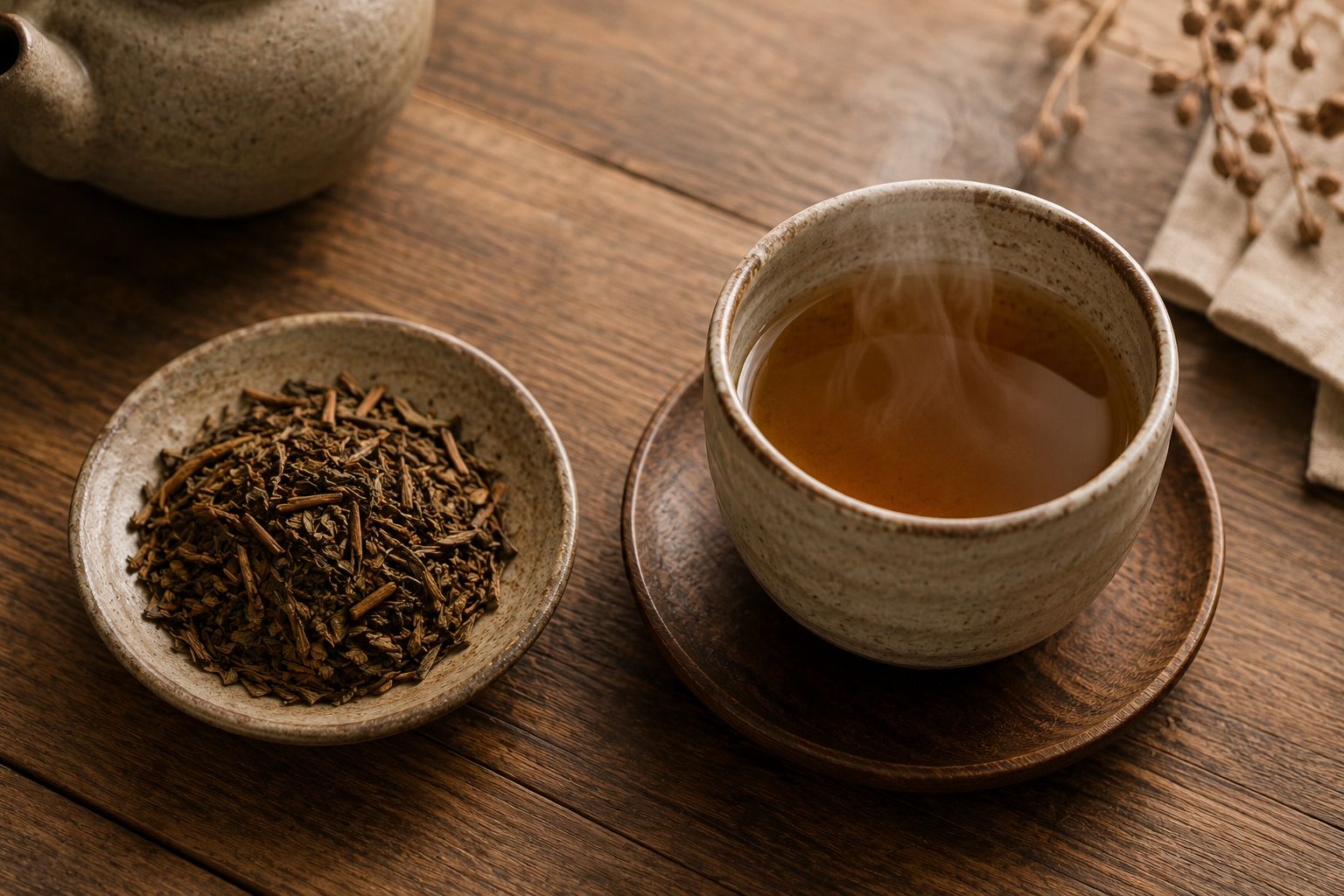
Hojicha was the tea I recommended to my coffee-addicted friend who kept saying matcha made her jittery. One cup in, she asked why nobody told her roasted green tea existed sooner. That reaction isn’t rare — hojicha has this way of winning people over almost immediately, because it tastes nothing like what most people expect from green tea. No grassy bitterness, no astringency to fight through. Just something closer to toasted grain and caramel, with next to no caffeine to worry about at 8pm.
The tricky part is that hojicha sits in a weird spot in the market. It’s not as hyped as matcha, so it doesn’t have dozens of dedicated subscription boxes competing for your attention. What it does have is a scattered mix of options — a couple of centuries-old Kyoto and Uji tea houses that happen to make excellent hojicha as part of a wider catalog, a modern brand built specifically around the hojicha latte trend, a small-batch regional specialty, and a familiar everyday name you’ve probably already seen on a grocery shelf without realizing how good its hojicha actually is. None of that is obvious until you’ve actually gone looking, so I did the looking for you.
The Problem You’re Actually Trying to Solve
You’ve searched “best hojicha brands” because you’ve either already had good hojicha somewhere and want to recreate it at home, or you’ve heard about the hojicha latte trend and want to know where to actually buy the real thing instead of a flavored syrup dressed up with the name. Either way, you’re running into the same wall: unlike matcha, there isn’t a wall of “hojicha subscription box” options to sort through. What you actually get is a scattered field of individual products from brands that vary wildly in quality and sourcing honesty, with no obvious starting point.
That scattered field is actually the bigger trap. A lot of “hojicha powder” on the market is made from low-grade tea dust roasted dark enough to hide how mediocre the base leaf was. Good hojicha starts with decent tea before it ever sees a roasting drum, and a dark, smoky roast can mask an underlying leaf that wasn’t worth much to begin with — which is exactly how a lot of budget hojicha gets away with tasting merely “fine” instead of actually good. This guide sorts out which of the well-known names are doing that properly, and which ones are worth your money at every price point, including the cheap end.
Who This Article Is NOT For
Let’s save you some scrolling if this isn’t quite your situation.
- If you want flavored hojicha blends — vanilla hojicha, hojicha chai, anything with add-ins — none of what’s below is really about that. Everything here is rooted in the roasted leaf itself, not flavoring dressed up with a hojicha label.
- If you’re only after the cheapest possible bag to try hojicha once, one of the picks below actually covers that ground well, so keep reading rather than skipping straight to the grocery store aisle.
- If matcha lattes are actually what you’re after and hojicha is just a passing curiosity, you’ll get more mileage from my matcha powder brands comparison instead — the sourcing and grading conversations are completely different between the two categories.
If you’re past that, here’s where the actual comparison starts.
What I Actually Judged These On
Three criteria, consistent with every guide on this site.
1. Base leaf quality before roasting. Hojicha is fundamentally a processing technique, not a tea in its own right — it starts as bancha, sencha, kukicha (stems), or even leftover tencha, then gets roasted. I looked at whether a brand names what they started with, because that base leaf determines the ceiling of how good the final roast can taste.
2. Roasting craft and transparency. Is the roast level, the equipment, or the roaster’s approach described specifically, or is it just “traditionally roasted” with no further detail? Small-batch roasters who talk about drum temperature and batch size tend to actually care about consistency in a way mass producers don’t.
3. Fit for how you’ll actually drink it. Straight brewing and latte-making want different things from hojicha — latte use tolerates a bolder, darker roast better since milk mutes subtlety, while straight brewing rewards a more balanced roast that doesn’t need dairy to soften it. I noted which products lean which way so you’re not stuck guessing after the bag arrives.
Comparison Table
| Option | Base Leaf | Roast Style | Starting Price | Best For |
|---|---|---|---|---|
| Ippodo Kuki-Hojicha | Kukicha (stems) | Gentle, biscuit-like | ~$15–25 | Refined, food-pairing hojicha |
| Marukyu Koyamaen Hojicha | Leftover tencha | Gentle roast on high-grade leaf | ~$15–30 | Matcha lovers curious about hojicha |
| Maruhachi Kaga Boucha | Stem hojicha | Bold, smoky, drum-roasted | ~$15–25 | Distinctive regional character |
| Hojicha Co. | Blended leaf, powder | Dark roast, latte-optimized | ~$15–25 | Hojicha lattes specifically |
| Ito En | Bancha/sencha blend | Consistent, everyday roast | ~$8–15 | Budget-friendly daily drinking |
The Options, One by One
Ippodo Kuki-Hojicha
Shop Ippodo Kuki-Hojicha on Amazon →
Ippodo, the centuries-old Kyoto tea house, makes their hojicha from kukicha — the stems and twigs left over from processing other teas — rather than leaf. That base gives it a naturally lighter, more refined character than leaf-based hojicha.
What I liked: In my experience, this is the hojicha I’d serve someone who claims they don’t like roasted tea, because it’s gentler and more biscuit-like than smokier styles. It pairs well with food in a way bolder hojichas don’t, which fits Ippodo’s overall reputation for balance over intensity.
What bugged me: If you’re specifically chasing that deep, smoky, campfire-adjacent hojicha character, this will read as too mild. It’s a specific style, not an all-purpose “best hojicha” pick.
Bottom line: The right choice if refinement and food-pairing matter more to you than boldness.
Marukyu Koyamaen Hojicha
Shop Marukyu Koyamaen Hojicha on Amazon →
Marukyu Koyamaen is primarily known as a top-tier matcha producer, but their hojicha is made from high-grade tencha leaves that didn’t quite make the cut for matcha, then gently roasted rather than blasted dark. That starting point — leaf that was grown and shaded for matcha in the first place — sets it apart from hojicha made from ordinary bancha.
What I liked: You can genuinely taste the difference a better base leaf makes. The roast is gentle enough that you still get sweetness and depth rather than pure smokiness, which makes sense once you know it started life as near-matcha-grade tea.
What bugged me: It’s priced closer to a specialty tea than a daily-drinking bag, which makes sense given the leaf quality, but it’s worth knowing upfront if you were expecting bargain-bin hojicha pricing — this isn’t the tea to buy if you just want something cheap to try the category for the first time.
Bottom line: Worth trying specifically if you already love Marukyu Koyamaen’s matcha and are curious what their approach looks like applied to a roasted tea, or if you want to see what hojicha tastes like when it starts from genuinely premium leaf.
Maruhachi Kaga Boucha
Shop Maruhachi Kaga Boucha on Amazon →
This is a stem hojicha from Kanazawa, roasted in small batches in a rotating iron drum at high heat, and it’s the boldest, most distinctive option on this list — amber liquor, aromas leaning toward roasted chestnut, cocoa, and a touch of wood smoke.
What I liked: This is the hojicha for someone who wants character, not just a mild “green tea alternative.” The smoke and roast come through clearly without tipping into bitterness, and it’s the kind of tea that makes a genuinely memorable gift for someone who already drinks a lot of tea and wants something they haven’t tried.
What bugged me: That same boldness makes it a less obvious starting point if you’re brand new to hojicha and want something gentle to ease into. Start with a milder option first if this is your very first hojicha.
Bottom line: The most distinctive, gift-worthy pick on this list — not necessarily the first hojicha you should buy, but possibly the most memorable one.
Hojicha Co.
Shop Hojicha Co. powder on Amazon →
Hojicha Co. builds their whole product line around the hojicha latte specifically, with a dark roast powder designed to hold up against milk rather than get lost in it.
What I liked: If lattes are genuinely your main use case, this is the most purpose-built option here. The darker roast reads as more forceful in a straight cup but translates into a well-balanced, not-too-sweet latte, which is exactly the tradeoff you want from a powder built for that job.
What bugged me: Drunk straight, without milk, the boldness that makes it great in a latte can feel like a bit much — it’s optimized for one use case and it shows.
Bottom line: The clear pick if hojicha lattes are the actual reason you’re here, less ideal if you mostly drink tea straight.
Want more detail? My full Hojicha Co. review covers who’s behind the brand, how to use the powder beyond a basic latte, and the honest downsides.
Ito En
Shop Ito En hojicha on Amazon →
Ito En is the name most people have actually seen before, even if they didn’t clock it as hojicha — it’s one of Japan’s largest tea companies, and their roasted green tea shows up in tea bags, bottled drinks, and instant powder sticks across grocery stores worldwide.
What I liked: This is the most accessible, most consistent everyday option on this list by a wide margin. It won’t blow you away with complexity, but it’s a genuinely solid, reliable cup for a fraction of what the specialty brands charge, and it’s the easiest to buy in bulk without a second thought.
What bugged me: It’s mass-produced, and it tastes like it — pleasant and clean, but without the depth or character you get from a small-batch, single-origin option like Kaga Boucha or Marukyu Koyamaen. This is a daily-drinker, not a tea to savor slowly.
Bottom line: The right call if you just want good, reliable hojicha in your kitchen without spending specialty-tea money, or if you’re not yet sure hojicha is going to become a habit and don’t want to commit much upfront.
Which One Should You Actually Buy
If you want something refined that pairs well with food: Ippodo Kuki-Hojicha. Gentle, biscuit-like, never smoky.
If you already love a specific matcha brand and want to see their range: Marukyu Koyamaen Hojicha, made from the same caliber of leaf as their matcha.
If you want something bold and memorable, especially as a gift: Maruhachi Kaga Boucha. The most distinctive character on this list.
If lattes are your whole reason for being here: Hojicha Co. Built specifically for that job, and it shows in the results.
If you just want a reliable everyday cup without spending much: Ito En. Not exciting, but genuinely dependable, and the easiest on-ramp if you’re still deciding whether hojicha is for you.
A Few Things People Ask Me
Is hojicha actually caffeine-free? No. It’s often described as nearly caffeine-free, but Japan’s official food composition tables list brewed hojicha at about 20mg of caffeine per 100ml – the same as sencha under their standard brewing method. In practice, a home cup is often gentler, because hojicha is usually made from later-harvest leaves or stems and brewed quickly with plenty of water. It’s a good evening choice for many people, just not a zero-caffeine one.
Can I make hojicha from regular green tea myself by roasting it at home? Technically yes, and some people do pan-roast bancha at home for fun, but getting the even, controlled roast that small-batch producers achieve with proper drum roasters is hard to replicate in a home kitchen. It’s a fun experiment, not a real substitute for a well-roasted commercial product.
Why do some hojicha products use stems instead of leaves? Stem-based hojicha, called kukicha when unroasted, naturally has a lighter, sweeter character than leaf-based hojicha, and stems roast more evenly than leaf because they’re denser and less prone to scorching. That’s part of why Ippodo’s stem-based hojicha reads as gentler than a leaf-roasted style like Kaga Boucha.
Does the powder form work as well as loose leaf for a straight cup, not just lattes? It can, but powder brands tend to be optimized specifically for milk-based drinks, where a bolder roast reads as balanced rather than harsh. If you mostly drink hojicha straight, a loose-leaf option built for that purpose, like Ippodo’s or Marukyu Koyamaen’s, will usually taste more considered than a latte-first powder.
Is the mass-market stuff like Ito En actually worth buying, or should I always go specialty? It’s genuinely worth buying if your goal is a dependable daily cup rather than a tea to savor and think about. Specialty hojicha rewards attention the way a good coffee bean does; Ito En is more like a solid drip coffee — reliable, unpretentious, and exactly what you want most mornings.
Where I Landed
If I had to recommend just one starting point to someone who’s never had real hojicha, I’d point them to Ippodo’s Kuki-Hojicha first, purely because it’s the gentlest on-ramp and the least likely to surprise someone expecting “just tea.” But the tea I keep coming back to for myself is the Kaga Boucha — that smoky, roasted-chestnut character isn’t for everyone’s first cup, but once you know you like hojicha, it’s the one that actually feels worth seeking out rather than just defaulting to whatever’s on the shelf.
And if you just want a dependable everyday bag without thinking too hard about it, Ito En will not let you down — it’s proof that you don’t need to spend specialty-tea money to get a genuinely decent cup of hojicha on a Tuesday morning.
Whichever you pick, brew it a little differently than you would sencha or matcha — hojicha handles hotter water well, close to boiling, since roasting removes most of the compounds that turn bitter under heat. That’s part of why it’s such a forgiving, easy tea to get right on your first try, even if everything else on this list of options felt a little overwhelming to sort through. It’s also, in my experience, the tea most likely to convert someone who insists they don’t like green tea at all — which might be exactly why you ended up here.
Ready to try one? Start with Ippodo Kuki-Hojicha on Amazon for a gentle first cup, or browse Nio Teas for farm-direct Japanese teas with the link-only discount.