Tag: Healthy Matcha Recipes

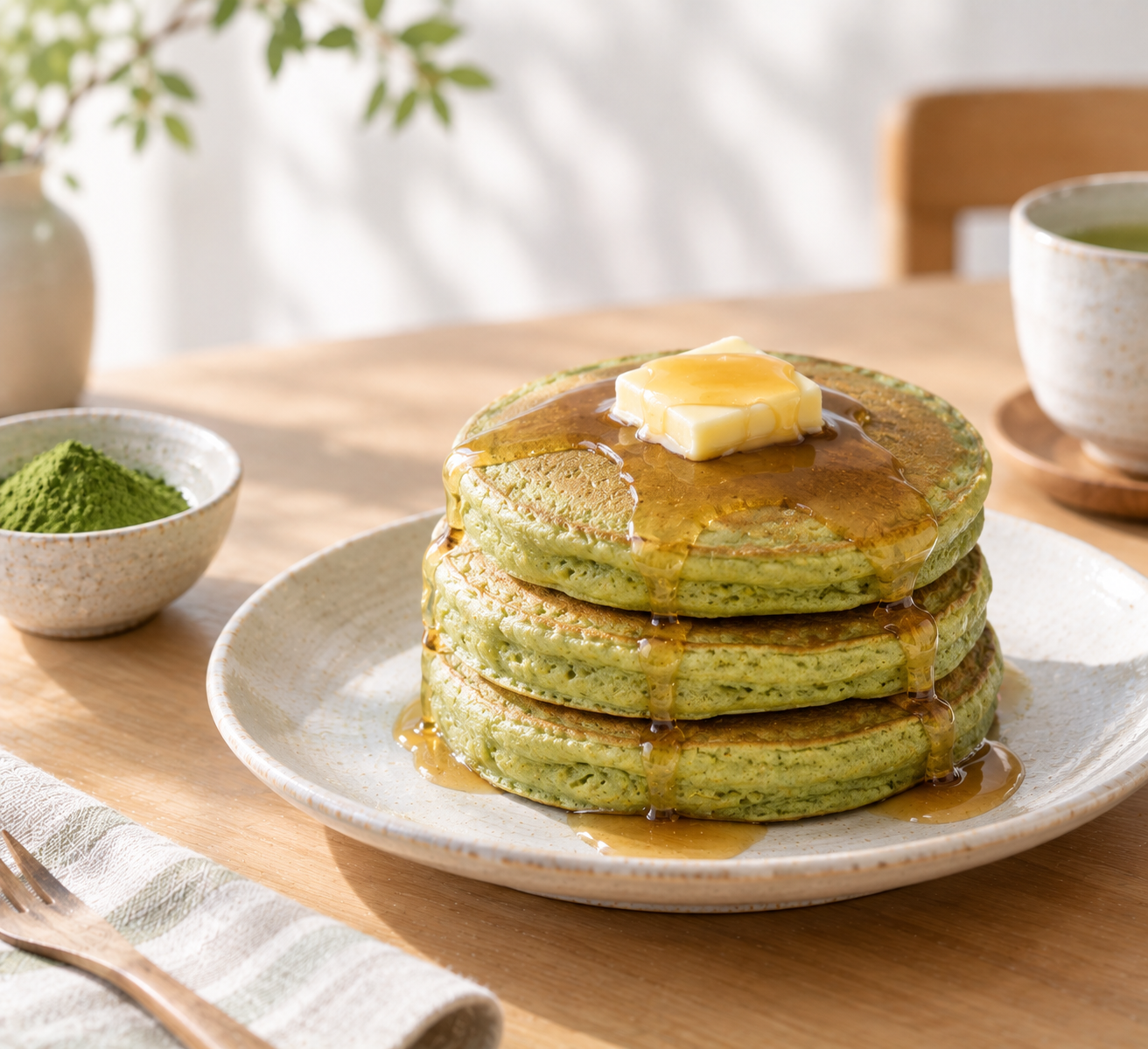
  • Matcha for Breakfast: Overnight Oats and Pancakes Worth Waking Up For

    Matcha for Breakfast: Overnight Oats and Pancakes Worth Waking Up For

    Disclosure: This post contains affiliate links. If you buy through one of them, I may earn a small commission at no extra cost to you.

    Matcha at breakfast usually means a latte on the side, not something actually mixed into the food itself. That’s a missed opportunity – matcha holds up well in both a no-cook overnight oats base and a proper cooked pancake batter, and in both cases it’s doing more than adding color. The bitterness cuts through the natural sweetness of maple syrup or fruit toppings the same way it does in a dessert or cocktail, just at breakfast volume rather than dessert richness.

    The Problem You’re Actually Trying to Solve

    Matcha breakfast recipes online often treat the matcha as an afterthought – a spoonful stirred in at the end that leaves visible green clumps in the finished dish, rather than fully incorporated the way the rest of the ingredients are. Both recipes below solve that the same way: get the matcha fully dissolved into a liquid before it meets anything solid, rather than trying to fix clumping after the fact.

    Who This Article Is NOT For

    • If you want a quick drinkable breakfast rather than something you eat with a spoon or fork, my guide to making a matcha latte at home is the faster option.
    • If you’re looking for matcha desserts rather than breakfast food specifically, my matcha dessert guide covers ice cream, cheesecake, and pudding instead.
    • If you don’t have a blender and don’t want to whisk matcha by hand carefully, the overnight oats recipe specifically benefits from blending – it’s still possible without one, just more prone to clumping.

    Two Matcha Breakfasts Worth Making

    1. Matcha Overnight Oats

    A no-cook, make-ahead breakfast that’s ready the moment you wake up, with the matcha fully blended in rather than clumped on top.

    Ingredients (makes 3 servings):

    • 2 cups creamy non-dairy milk (cashew, oat, or soy work best)
    • 2 tbsp maple syrup, plus more to taste
    • 1 tsp vanilla extract
    • Pinch of salt
    • 1 tbsp matcha powder
    • 2 cups rolled or quick oats
    • 2 tbsp chia seeds
    • 1/2 cup plain unsweetened yogurt (dairy-free or regular)

    Method: Add the milk, maple syrup, vanilla, salt, and matcha to a blender and blend on high for 30-45 seconds, until the matcha is fully incorporated with no visible clumps – this step is what actually prevents the gritty, unevenly green result most people get from just stirring matcha into oats directly. In a separate large bowl, combine the oats and chia seeds. Pour the blended matcha milk over the dry ingredients, add the yogurt, and stir well. Let it sit for 5 minutes, stir again, then let it rest another 5 minutes to thicken further. Transfer to jars and refrigerate for at least 4 hours, ideally overnight. If you don’t have a blender, an immersion blender or even a chasen whisked vigorously into the milk first can substitute, though the blender gives the most reliably smooth result.

    2. Fluffy Matcha Pancakes

    A proper cooked breakfast for when overnight oats feels too light, using matcha the same way you’d use cocoa powder in a chocolate pancake – sifted into the dry ingredients rather than dissolved separately.

    Ingredients (serves 4):

    • 1 1/2 cups all-purpose flour
    • 2 1/2 tsp baking powder (aluminum-free, to avoid a metallic taste fighting the matcha)
    • 1 tbsp matcha powder
    • 1/2 tsp salt
    • 1 tbsp sugar
    • 1 1/4 cups milk
    • 1 egg
    • 1 tsp vanilla extract
    • 3 tbsp melted butter

    Method: Sift together the flour, baking powder, matcha, salt, and sugar in a large bowl – sifting matters more here than with most dry ingredients, since matcha clumps more than flour does on its own. Make a well in the center, add the milk, egg, vanilla, and melted butter, and whisk until nearly smooth – stop as soon as most lumps disappear rather than mixing until perfectly uniform, since overmixing is what makes pancakes dense instead of fluffy. Heat a griddle to 300-350°F, grease lightly, and pour 1/4 cup of batter per pancake. Cook for about 2 minutes until the edges look set and bubbles appear on the surface, then flip and cook about another minute. Serve with your preferred toppings.

    A Few Things People Ask Me

    Can I use ceremonial-grade matcha for either of these, or should I stick with culinary-grade? Culinary-grade is the more sensible choice for both – neither recipe is showcasing matcha’s flavor on its own the way drinking it does, and culinary-grade holds up better against the other ingredients while costing less.

    Why does my matcha pancake batter still have small green flecks even after sifting? Sifting reduces clumping significantly but doesn’t always eliminate it completely by hand – if you want a fully smooth result, whisking the matcha into a small amount of the milk first (the same technique used in the overnight oats recipe) before combining with the rest of the wet ingredients gets you closer to zero visible flecks.

    How long do matcha overnight oats keep in the fridge? Up to about 5 days in a sealed container, making this genuinely useful for a make-once, eat-all-week breakfast routine rather than something you prep fresh daily.

    What matcha would you recommend keeping on hand for breakfast recipes like these? Culinary-grade matcha on Amazon is the practical choice here, and Nio Teas’ matcha is what I used for both recipes above if you want a specific brand to start with.

    Where I Landed

    Both of these recipes work for the same underlying reason: get the matcha smooth before it meets anything else, whether that’s blending it into liquid for the oats or sifting it into dry ingredients for the pancakes. Once that step is handled properly, matcha stops being a garnish you’re working around and becomes just another breakfast ingredient – one that happens to add a genuinely useful bit of bitterness against all that maple syrup.
  • The Matcha Smoothie Guide: Recipes That Actually Taste Good, Not Just Green

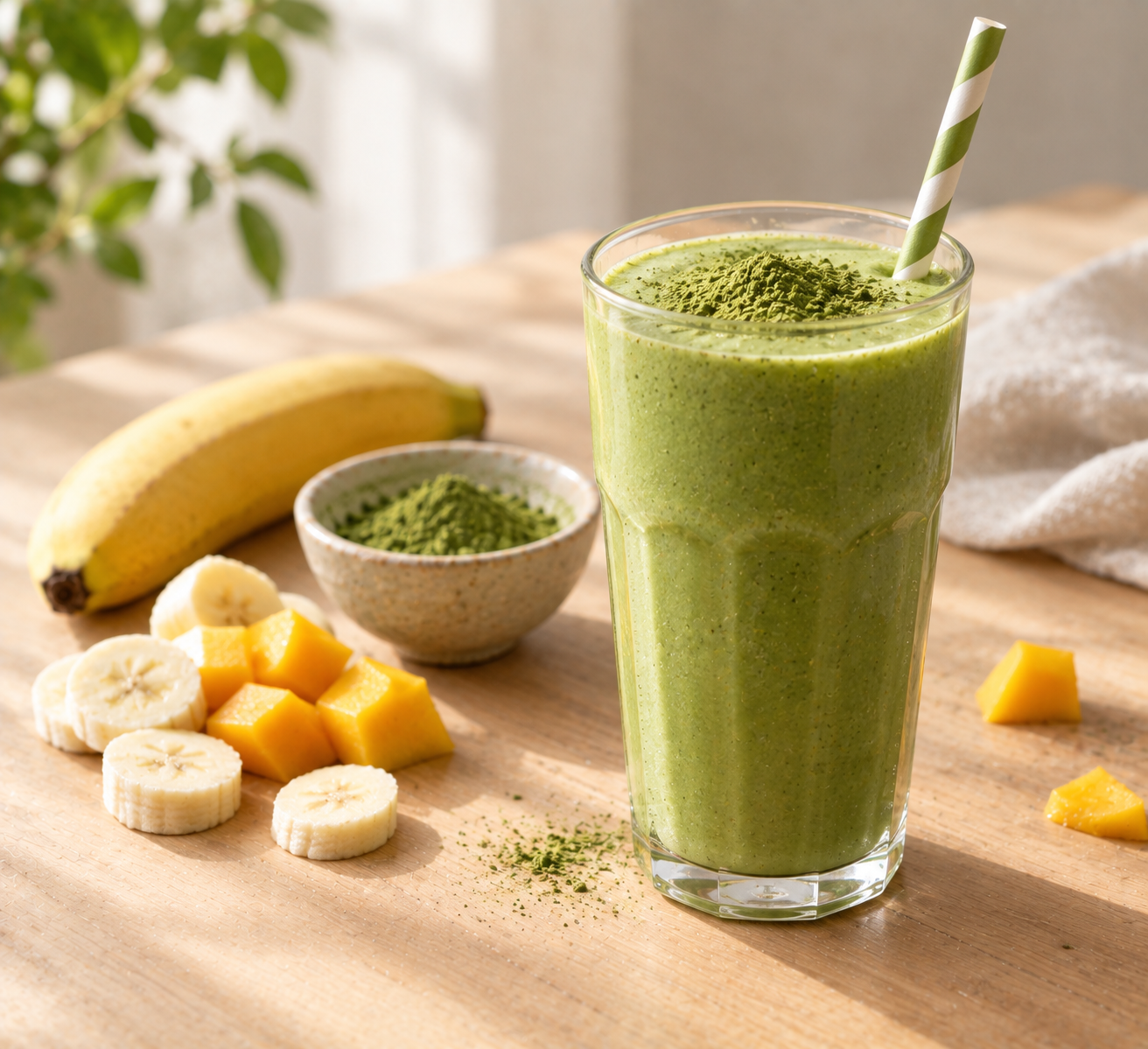
    The Matcha Smoothie Guide: Recipes That Actually Taste Good, Not Just Green

    Disclosure: This post contains affiliate links. If you buy through one of them, I may earn a small commission at no extra cost to you.

    My early attempts at matcha smoothies all had the same problem: I’d dump a spoonful of matcha into the blender with everything else and end up with a smoothie that tasted mostly of bitterness, with little green flecks unevenly distributed throughout. It took a few tries to realize that matcha in a smoothie behaves a bit differently than matcha whisked into hot water – the fruit, ice, and other ingredients change how it dissolves and how its bitterness reads against everything else.

    Once I adjusted for that, matcha smoothies became one of my more reliable ways to actually use up a tin of matcha regularly, rather than one that sits in the cupboard between the occasional traditional cup.

    The Problem You’re Actually Trying to Solve

    Most matcha smoothie recipes either use too little matcha, so you can barely taste it and you’re mostly just paying for green food coloring, or too much without balancing it against the other ingredients, resulting in something aggressively bitter. There’s also a common assumption that any matcha will work equally well in a smoothie, when grade actually makes a real difference to how the finished drink tastes.

    Who This Article Is NOT For

    • If you want a hot matcha drink rather than a cold blended one, my guide to making a matcha latte at home covers that separately.
    • If you’re looking for matcha desserts rather than a drinkable smoothie, my matcha dessert guide covers ice cream, cheesecake, and pudding instead.
    • If you’re avoiding fruit sugars entirely and want a purely savory or unsweetened matcha drink, most of these recipes lean toward naturally sweet fruit bases and won’t suit that goal.

    Getting the Matcha Right Before You Blend

    Grade matters here more than people expect. More expensive ceremonial-grade matcha tends to taste smoother and more mellow in a smoothie, while cheaper culinary-grade matcha comes through more bitter. Since a smoothie already has fruit, milk, and sometimes sweetener working to balance the matcha, either grade can work – but if you’ve had a matcha smoothie that tasted unpleasantly sharp, it’s worth trying a smoother, more mellow matcha before assuming smoothies just aren’t for you.

    Start with less than you think you need. One teaspoon is a reasonable starting point for a single smoothie; increase in quarter-teaspoon increments from there if you want a stronger matcha presence. Brands vary a surprising amount in intensity, so what tastes right from one tin might be overpowering or underwhelming from another – taste-test rather than assuming a fixed amount will always be correct.

    Add matcha directly to the blender rather than pre-mixing it. Unlike whisking matcha into hot water, a smoothie’s blender does the work of breaking up clumps for you, as long as the matcha goes in with enough liquid around it rather than getting trapped against frozen fruit or ice at the bottom.

    Two Matcha Smoothies Worth Making

    1. Classic Banana Matcha Smoothie

    The most forgiving version to start with – just four main ingredients, no exotic produce required.

    Ingredients:

    • 2 frozen bananas
    • 1 cup unsweetened almond milk (plus more as needed)
    • 1 tsp matcha powder, adjustable to taste
    • 1/4 tsp vanilla extract
    • A few handfuls of ice
    • Honey or maple syrup, optional

    Method: Add the frozen bananas, almond milk, matcha, and vanilla to a blender and blend until smooth, adding more milk if it’s struggling to fully combine. Add the ice and blend again until you reach your preferred thickness. Taste before serving, and add honey or maple syrup if you want more sweetness balancing the matcha’s bitterness.

    2. Matcha Mango Spinach Smoothie

    A brighter, more tropical option that also sneaks in a serving of greens without tasting like it.

    Ingredients (serves 2):

    • 2 cups frozen mango chunks
    • 1/2 cup frozen spinach
    • 2 tbsp chia seeds
    • 1 tbsp matcha powder
    • 2 cups oat milk
    • 1 tsp vanilla extract, optional
    • 2 tsp maple syrup, optional

    Method: Combine the mango, spinach, chia seeds, matcha, oat milk, and vanilla (plus maple syrup if using) in a blender. Blend on high for about a minute, until fully smooth and creamy. If it’s too thick, add more milk gradually; if it’s too thin, add a bit more frozen fruit. Serve immediately – like most smoothies, this one is best drunk fresh rather than stored, though it will keep sealed in the fridge for up to 24 hours if needed (give it a good shake before drinking).

    Both recipes are easy to adapt: swap the almond or oat milk for soy or dairy milk depending on preference, or substitute pineapple or banana for the mango in the second recipe if that’s what you have on hand. Kale works in place of spinach too, though it’s slightly more assertive in flavor.

    A Few Things People Ask Me

    Can I make a matcha smoothie ahead of time for the next morning? You can prep the frozen ingredients (fruit, spinach, chia seeds, and matcha) in a freezer bag the night before, then just add milk and blend in the morning – this is a genuinely useful shortcut if you’re trying to make matcha smoothies a regular habit rather than an occasional project. The finished blended smoothie itself, though, is best drunk fresh rather than made a full day ahead.

    Why does my matcha smoothie taste more bitter than the recipes suggest it should? Usually either too much matcha for the amount of fruit and liquid, or a culinary-grade matcha with a naturally sharper flavor than what the recipe was tested with. Start with less matcha than the recipe calls for, taste, and add more gradually rather than committing to the full amount upfront.

    Does blending matcha destroy any of its benefits the way boiling water might? No – blending is mechanical, not high-heat, so it doesn’t degrade matcha the way genuinely hot water can affect some of its more delicate compounds. A smoothie is actually a fairly gentle way to consume matcha in that specific sense.

    What matcha should I keep on hand specifically for smoothies? Since smoothies have a lot of other flavors to compete with, culinary-grade matcha on Amazon is a perfectly reasonable and more affordable choice here rather than reaching for your best ceremonial-grade tin – save that one for occasions where matcha is the only flavor in the cup.

    Where I Landed

    The real shift for me was realizing a matcha smoothie isn’t really “a smoothie with matcha added” so much as a balancing act between matcha’s bitterness and whatever fruit, milk, and sweetener you’re building around it. Once I stopped treating the matcha amount as fixed and started tasting and adjusting as I went, matcha smoothies stopped being the thing I occasionally forced myself to finish and became one of the more regular ways I actually get through a tin of matcha before it goes stale. If you want to try a specific brand rather than guessing from the grocery store shelf, Nio Teas’ matcha is what I’ve used in both recipes above.