Tag: Green Tea Brewing Tips

  • Why Is My Green Tea Cloudy? Good Cloudiness, Bad Cloudiness, and How to Tell

    Why Is My Green Tea Cloudy? Good Cloudiness, Bad Cloudiness, and How to Tell

    Disclosure: This post contains affiliate links. If you buy through one of them, I may earn a small commission at no extra cost to you.

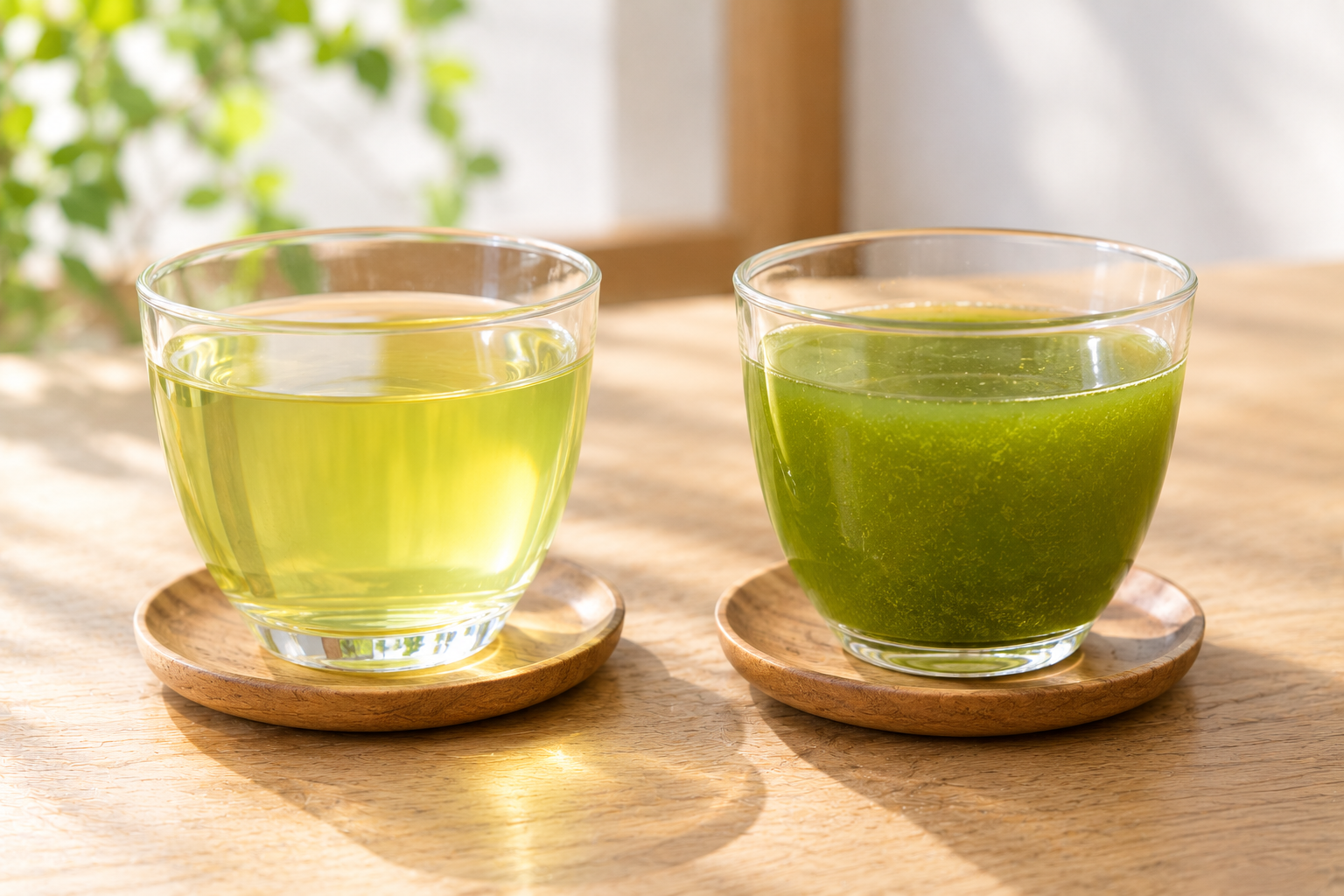
    The first time I brewed fukamushi sencha, I almost poured it out. Instead of the clear, pale yellow-green cup I was used to, it came out thick, cloudy and almost opaque green, with a fine sediment settling at the bottom. I assumed I’d done something wrong. I hadn’t – for that tea, the cloudiness was exactly the point. But a few weeks later, a different cup of iced sencha turned hazy and dull in the fridge, and that time something really had changed.

    Cloudy Japanese green tea isn’t automatically good or bad. It depends on why it’s cloudy, and the causes are easy to tell apart once you know what to look for.

    The Problem You’re Actually Trying to Solve

    Most people searching this have just poured a cup that looks different from what they expected – murky instead of clear, or hazy after cooling – and want to know whether the tea is stale, whether they brewed it wrong, or whether it’s even safe to drink. In almost every case, it’s safe. The real question is whether the cloudiness is part of the tea’s character, or a sign you should change your water, your brewing or your tea.

    Who This Article Is NOT For

    • If your matcha looks cloudy, that’s simply how it works: matcha is powdered leaf suspended in water, not an infusion, so it’s always opaque.
    • If your tea is brown rather than cloudy and you’re drinking hojicha, that’s normal too – roasted tea is meant to be brown.
    • If you suspect your tea has actually gone moldy (a musty smell, visible growth, or tea left out for a long time), don’t drink it. That’s a different problem from cloudiness.

    Quick Diagnosis

    What you seeMost likely causeGood or bad?
    Opaque green, fine sediment at the bottom, rich tasteFine leaf particles (fukamushi, konacha)Good – it’s the tea’s style
    Cloudiness only in the last pour from the potFine particles collected in the final dropsGood – often the richest part
    Clear when hot, hazy after cooling or in the fridge“Tea cream” forming as the tea coolsHarmless – mostly cosmetic
    Grayish haze, an oily-looking film on topHard waterChange the water
    Dull brown-yellow, flat taste, papery or hay-like smellOld or badly stored teaTime for fresh tea

    Good Cloudiness: Fine Leaf Particles

    The most common reason Japanese green tea looks cloudy is the leaf itself. Fukamushi sencha – deep-steamed sencha – is steamed two to three times longer than standard sencha, which makes the leaves softer and more fragile. They break into fine particles during rolling, and those particles pass through the teapot’s filter into your cup. The result is a deep green, cloudy brew with a fuller, smoother body and less bitterness than regular sencha. My fukamushi sencha guide explains the process in more detail.

    You’ll see the same thing with konacha, the small leaf fragments served at sushi restaurants, and to a lesser extent with any sencha that has a lot of broken leaf.

    This kind of cloudiness isn’t a defect. The fine particles carry flavor and are part of why these teas taste so rich. A few tips:

    • Pour all the way to the last drop. The final drops from the pot often carry the most particles and flavor.
    • Expect sediment. It settles at the bottom of the cup; drink it or leave it, either is fine.
    • Use a fine filter. A kyusu with a fine mesh or ceramic filter keeps most of the leaf in the pot while letting the cloudy, flavorful liquid through.

    Harmless Cloudiness: Tea Cream When It Cools

    If your tea looks clear while it’s hot but turns hazy as it cools – especially in the fridge – you’re seeing what tea scientists call “tea cream.” When tea is brewed, polyphenols (including catechins) and caffeine dissolve into the hot water. As it cools, these compounds bind together into larger clusters that the water can no longer keep dissolved, and they show up as a visible haze.

    It’s harmless. A few things make it worse or better:

    • Stronger tea clouds more. More leaf means more of the compounds that form haze.
    • Hot-brewed tea that’s later chilled clouds most. That’s why hot tea poured over ice or put in the fridge often turns murky.
    • Cold brewing avoids most of it. Tea brewed in cold water extracts far fewer catechins, so it tends to stay clear. If you want clear iced tea, cold brewing is the most reliable fix.
    • Reheating clears it temporarily, but it’ll cloud again when it cools.

    Bad Cloudiness: Hard Water

    If your tea has a grayish haze, a dull look, or an oily-looking film or “scum” on top, the water is the likely cause. Hard water contains a lot of calcium and magnesium, which react with the tea’s polyphenols and form fine particles – the same chemistry that leaves scale in your kettle. Hard water also mutes green tea’s flavor, making it taste flat.

    The fix is simple: use softer water. A filter that reduces minerals, or a soft bottled water, usually solves both the cloudiness and the dull taste. My guide to water and Japanese tea explains which water works best and why.

    Bad Cloudiness: Old Tea

    Stale tea doesn’t usually turn cloudy so much as dull. Instead of a fresh yellow-green, the brew looks flat brown-yellow, and the leaves smell dusty, papery or like hay rather than fresh and grassy. That’s oxidation from months of exposure to air, light, heat or moisture.

    It’s not harmful, but the tea has lost most of what made it good. Store opened tea in an airtight, opaque container somewhere cool, and finish it within a few weeks to a couple of months.

    A Few Things People Ask Me

    Is cloudy green tea safe to drink? Yes, in nearly every case. Fine particles, tea cream and hard-water haze are all harmless. The only time to throw tea out is if it smells sour or musty, or has been left out for a long time – especially brewed tea at room temperature.

    Does cloudy tea mean low quality? No. Fukamushi sencha is cloudy by design, and some very good teas brew opaque. Clarity tells you about the style of tea and your water, not its grade.

    Why does my tea look clear in the pot but cloudy in the cup? Often it’s the last pour: the final drops carry the most fine particles. It can also be tea cream forming as the tea cools in a cold cup.

    What tea should I try if I want that rich, cloudy cup? A fukamushi sencha from Shizuoka or Kagoshima is the classic choice – Nio Teas’ sencha collection includes several. If hard water is your problem, a mineral-reducing water filter pitcher on Amazon is the simplest upgrade.

    Where I Landed

    Cloudy green tea taught me to look past appearance. A thick, opaque fukamushi is often the richest cup you’ll make, and a little haze in iced tea is just chemistry, not a mistake. The cloudiness worth fixing is the dull, gray kind from hard water, and the flat, brown look of old tea. Get those two right – soft water and fresh leaves – and you can enjoy every other kind of cloudy cup without a second thought.
  • The Best Electric Kettle for Green Tea (and Why Most “Tea Kettles” Can’t Do Gyokuro)

    The Best Electric Kettle for Green Tea (and Why Most “Tea Kettles” Can’t Do Gyokuro)

    Disclosure: This post contains affiliate links. If you buy through one of them, I may earn a small commission at no extra cost to you. Specs below come from manufacturer pages and published reviews; check the current model before buying, since kettles get updated often.

    I spent years making Japanese green tea with a regular boil-only kettle and the “pour it between cups to cool it down” trick. It works, but it’s guesswork, and on a busy morning I’d skip it and end up with bitter sencha. A variable-temperature kettle fixed that overnight. What I didn’t expect was how many kettles sold as “tea kettles” can’t actually reach the temperatures Japanese green tea needs – several popular models don’t go below 175°F (80°C), which is already too hot for gyokuro and the upper limit for good sencha.

    The Problem You’re Actually Trying to Solve

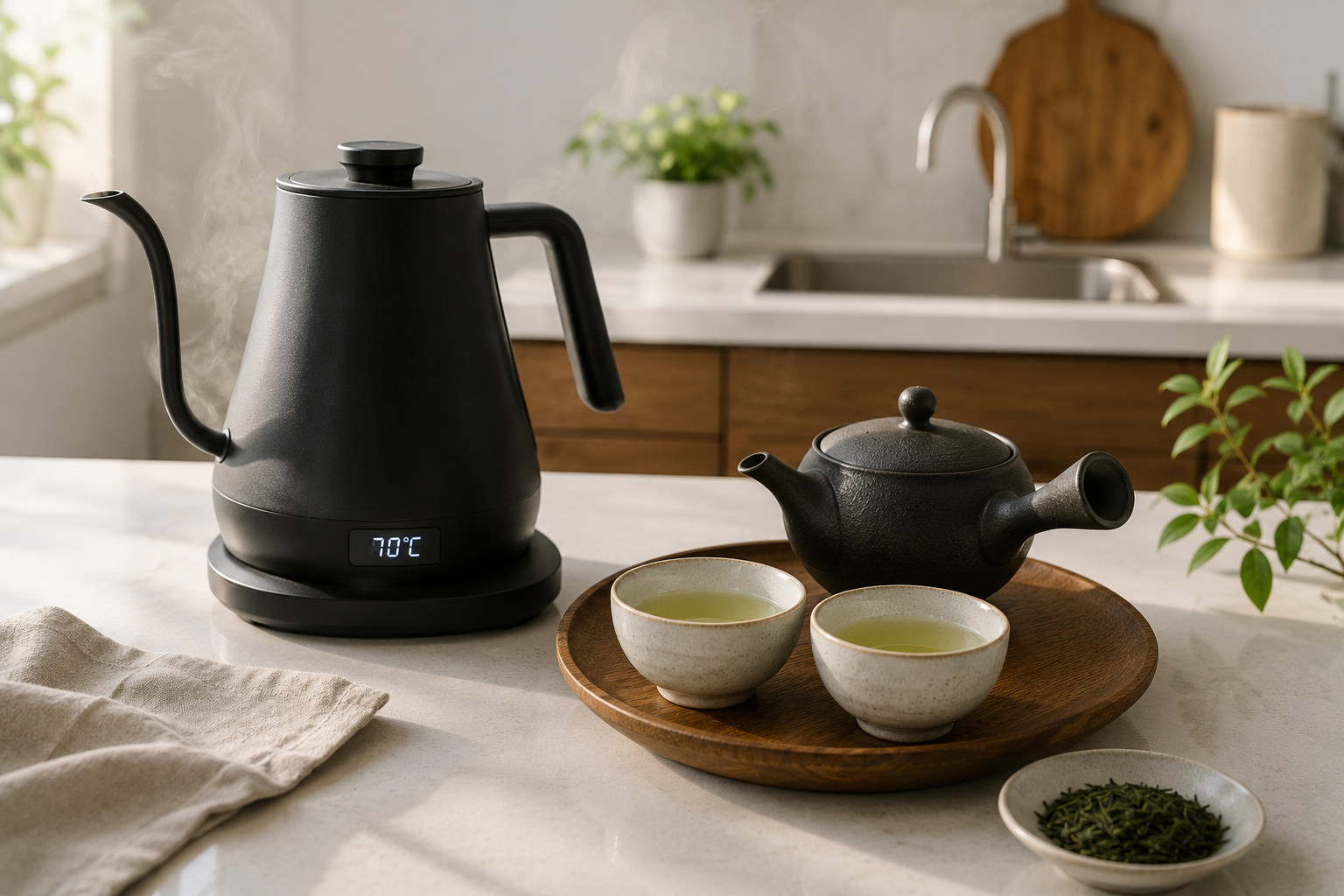
    Japanese green teas want very different water temperatures. Roughly: gyokuro at 60-70°C (140-158°F), sencha at 70-80°C (158-176°F), genmaicha at 80-95°C, and hojicha near boiling. (My temperature guide covers why in detail.) So the real question isn’t “which kettle is best?” but “which kettle can hit the low end of that range, reliably, without fuss?” – and that’s where kettles differ most.

    Who This Article Is NOT For

    • If you only drink hojicha, genmaicha or black tea, a basic boil-only kettle is fine. Those teas take near-boiling water anyway.
    • If you’re happy with the cooling-between-cups method and don’t mind the extra minute, you don’t need new equipment.
    • If you mainly want a kettle for pour-over coffee, the picks overlap, but the priorities below are for tea.

    The One Spec That Matters Most: How Low Does It Go?

    Before anything else, check the lowest temperature a kettle can hold:

    KettleTemperature controlLowest settingCapacityKeep warm
    Fellow Stagg EKGAny temperature, 1° steps57°C / 135°F0.9LUp to 60 min
    OXO Brew Adjustable GooseneckAny temperature, 1° steps60°C / 140°F1L30 min
    Cuisinart PerfecTemp CPK-176 presets: 160, 175, 185, 190, 200, 212°F71°C / 160°F1.7L30 min
    Zojirushi VE Hybrid Water Boiler4 settings: 160, 175, 195, 208°F71°C / 160°F4L or 5LAll day
    Breville IQ Kettle BKE820XL5 presets, starting at 175°F80°C / 175°F1.8L20 min

    That last column is the trap. The Breville is a well-made kettle, but its lowest preset is 175°F (80°C) – the very top of the sencha range and too hot for gyokuro. The Cuisinart and Zojirushi bottom out at 160°F (about 71°C), which suits sencha and fukamushi well but is still a little warm for gyokuro. Only the degree-by-degree kettles cover the whole range.

    Fellow Stagg EKG: Best If You Drink Gyokuro or Want Exact Control

    The Stagg EKG sets any temperature from 57°C to 100°C (135-212°F) in one-degree steps and can hold it for up to an hour. That full range is what makes it the most complete option for Japanese tea: gyokuro at 60°C, sencha at 75°C and hojicha at boiling are all one dial-turn away. The hold mode is also handy for multiple infusions, since your second and third steeps can come from water that’s already at the right temperature.

    The trade-offs are price – it’s one of the most expensive kettles here – and capacity. At 0.9L it’s built for a few cups, not for a household.

    Pick it if: you drink gyokuro, care about precise temperatures, or want one kettle that handles every Japanese tea.

    OXO Brew Adjustable Gooseneck: Precise Control for Less

    The OXO also adjusts by the degree, from 140°F (60°C) up to boiling – just low enough for gyokuro – holds temperature for 30 minutes, and has a built-in timer, which is genuinely useful for short Japanese steeping times. It covers the same practical ground as the Fellow for most tea drinkers, usually for noticeably less money, with a slightly more utilitarian look.

    Pick it if: you want degree-by-degree control without paying for the Fellow’s design.

    Cuisinart PerfecTemp CPK-17: Best Preset Kettle for Sencha Drinkers

    If you don’t want to think about exact numbers, a preset kettle is easier, and the Cuisinart’s presets happen to fit Japanese tea better than most. Its lowest setting is 160°F (71°C), with 175°F (80°C) right above it – effectively a “sencha” button and a “genmaicha” button. It’s 1.7L, so it suits a household, and the 30-minute keep-warm covers a second pot.

    Pick it if: you mainly drink sencha or fukamushi and want one-touch simplicity.

    Zojirushi VE Hybrid Water Boiler: The Japanese Household Option

    This is what you’ll find in a lot of Japanese kitchens and offices: not a kettle but a hot water dispenser that keeps 4 or 5 liters at a set temperature all day. The four settings – 160, 175, 195 and 208°F – line up neatly with sencha, sencha/matcha, genmaicha and hojicha, and the display shows the actual water temperature. It’s made in Japan, uses vacuum insulation to save energy, and has a timer.

    It’s large and it’s an investment, but if several people in your home drink tea throughout the day, it removes the step of boiling and waiting entirely.

    Pick it if: tea is an all-day habit, or you’re making it for more than one or two people.

    Breville IQ Kettle BKE820XL: Good Kettle, Wrong Lowest Temperature

    The Breville is fast, well built and has a nice soft-opening lid. I include it because it’s often recommended as a “tea kettle,” and it’s worth knowing its limit: five presets starting at 175°F (80°C). That’s fine for genmaicha, hojicha, and black tea, and borderline for sencha. For gyokuro, you’d be back to cooling the water yourself.

    Pick it if: you drink more black tea or hojicha than delicate green tea.

    Do You Need a Gooseneck?

    For pour-over coffee, a gooseneck spout matters. For Japanese tea, much less so – you’re filling a kyusu, not pouring slowly over a coffee bed. The two degree-by-degree kettles above happen to be goosenecks, but don’t buy one for the spout alone. Temperature control is what changes the taste of your tea.

    A Few Things People Ask Me

    Is a variable-temperature kettle really worth it for green tea? If you drink sencha or gyokuro regularly, yes. Water that’s too hot is the most common reason Japanese green tea tastes bitter, and a kettle that sets the temperature for you removes that mistake every single time.

    Can I use a preset kettle for gyokuro? You can, with a small extra step: heat to the lowest preset, pour it into your cups or a yuzamashi (cooling bowl), and wait a minute before pouring into the kyusu. Each transfer drops the temperature a few degrees.

    What about matcha? Matcha does well at roughly 70-80°C, so any kettle with a 160°F or 175°F setting covers it.

    Which one would you buy first? If you drink gyokuro or want to brew everything precisely, the Fellow Stagg EKG on Amazon is the most complete. For a household that drinks sencha all day, the Zojirushi water boiler on Amazon is the more practical choice.

    Where I Landed

    The best kettle for green tea is the one that can reach the low temperatures your tea actually needs. Check the lowest setting before anything else: if you drink gyokuro, go degree-by-degree with the Fellow or OXO; if you mainly drink sencha, the Cuisinart’s 160°F preset is enough; and if tea runs all day in your home, the Zojirushi does it the Japanese way. Then put the money you saved toward better tea – my sencha brand comparison is a good place to start.

  • Does Water Quality Actually Change How Japanese Tea Tastes?

    Does Water Quality Actually Change How Japanese Tea Tastes?

    Disclosure: This post contains affiliate links. If you buy through one of them, I may earn a small commission at no extra cost to you.

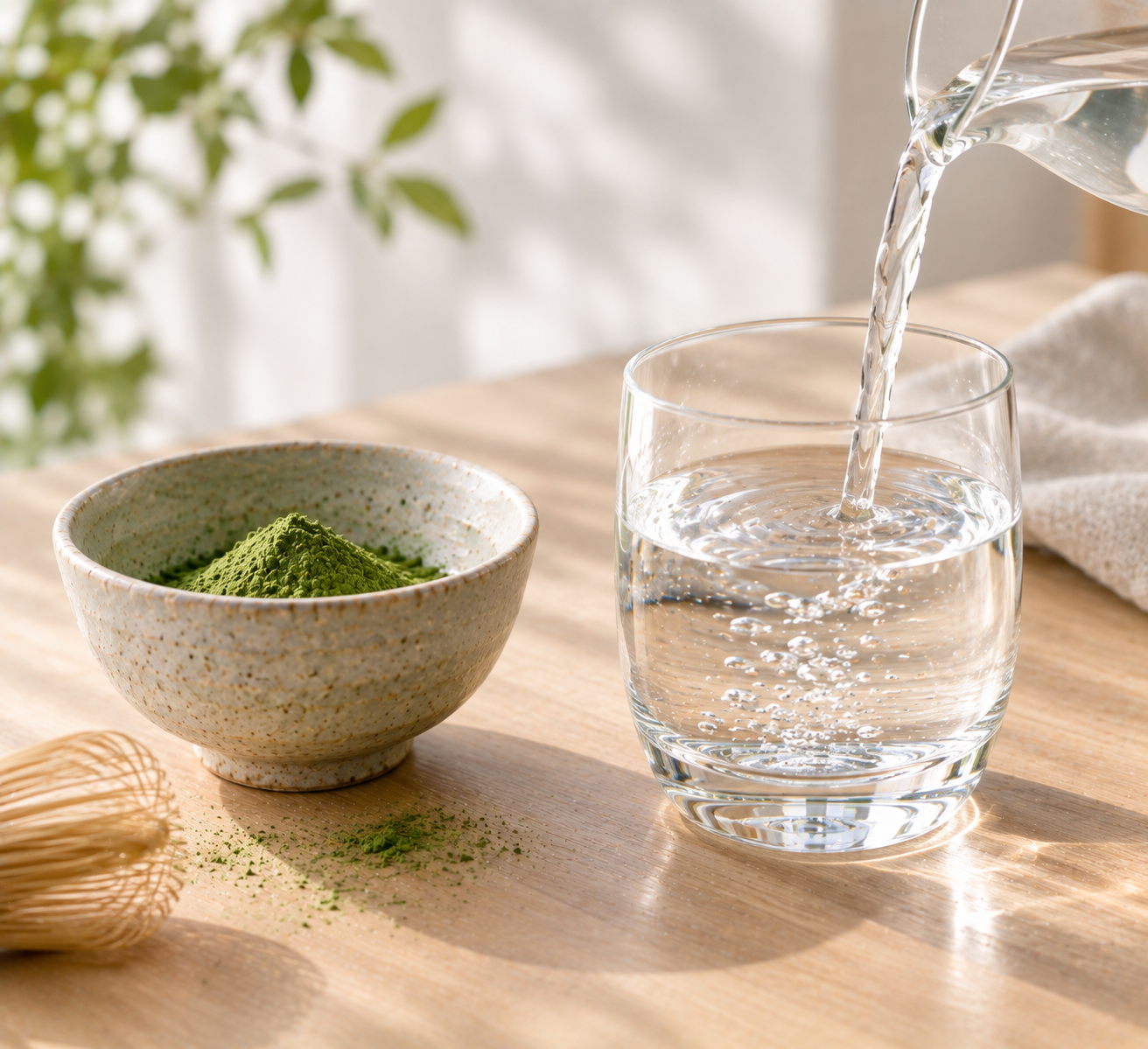
    I spent a frustrating stretch of time trying to fix a matcha that kept tasting flat and muted no matter what I adjusted – grade, temperature, whisking technique, all of it. The actual problem turned out to be my tap water. Once I switched to filtered water with the right mineral profile, the same matcha I’d been brewing for weeks suddenly tasted noticeably brighter and sweeter. Nothing about the tea had changed. The water had been quietly working against it the entire time.

    This isn’t a minor, precious detail that only serious tea people need to care about. Water makes up the overwhelming majority of what’s actually in your cup, and its mineral content genuinely changes how much of the tea’s own flavor makes it into that cup versus getting bound up and lost.

    The Problem You’re Actually Trying to Solve

    Most brewing advice fixates on temperature and steep time while treating water as a neutral, interchangeable backdrop – “just use water” – when in practice tap water varies enormously by region in mineral content and chlorine treatment, both of which measurably change how Japanese green tea and matcha taste. If you’ve followed every other piece of brewing advice correctly and your tea still tastes duller or flatter than it should, water is a genuinely underrated place to look.

    Who This Article Is NOT For

    • If you already use filtered or bottled low-mineral water and are happy with how your tea tastes, this is confirming what you’re already doing right rather than telling you something new to fix.
    • If you’re troubleshooting matcha clumping or bitterness from technique rather than water, my guide to making a matcha latte at home covers whisking and dissolving issues specifically.
    • If you’re brewing black tea or coffee rather than Japanese green tea, the specific mineral ranges below are calibrated to green tea’s more delicate flavor profile and don’t necessarily transfer directly.

    The Actual Mechanism

    Water hardness – the amount of dissolved calcium and magnesium in it – changes tea flavor through a fairly specific chemical process rather than just a vague “purity” effect. Calcium ions bind with the catechins and tannins in tea, forming complexes that make those compounds less available to your palate. The practical result is muted astringency and aroma, reduced sweetness and clarity, a cloudier appearance, and an overall flatter flavor – not a smoother, gentler version of the tea, but a genuinely suppressed one.

    This matters more for Japanese green tea specifically than for many other teas, because the qualities that make sencha, gyokuro, and matcha distinctive – theanine-driven umami, delicate aromatics – are exactly the compounds most easily muted by mineral-heavy water. A tea that leans on subtlety has less room to survive that suppression than a bolder, more robustly flavored black tea would.

    Ideal Water Hardness by Tea Type

    Different Japanese green teas have slightly different sensitivity to mineral content, generally tracking with how delicate and aromatics-dependent they are:

    • Japanese green tea generally: below 100 mg/L hardness
    • Sencha: 50-100 mg/L
    • Gyokuro (the most sensitive, given its umami-forward, aromatics-heavy profile – see my sencha vs. gyokuro comparison for why): ideally below 60 mg/L
    • Matcha: 50-80 mg/L

    The pattern across all of these: the more a tea depends on theanine and subtle aroma rather than bold, assertive flavor, the more it needs genuinely soft water to actually express that character rather than have it bound up and dulled by minerals.

    Chlorine Is a Separate Problem From Hardness

    Beyond mineral content, chlorine treatment in municipal tap water is its own issue entirely – it introduces a flavor similar to what you’d notice in pool water, and it clashes with green tea’s delicate flavor in a way that’s immediately noticeable once you know what to listen for. Iron and manganese, more common in well water, cause discoloration and unpleasant flavor of their own kind. Both of these are separate from the hardness/mineral discussion above, and both are usually addressed by the same solution: filtering before brewing.

    What Kind of Filter Actually Helps

    For most home tea drinkers, a countertop filter offers the best balance of cost, tea-relevant performance, and lifespan, typically treating several hundred gallons per cartridge before needing replacement. The goal for Japanese green tea is landing in a modest mineral range – broadly in the range of 1 to 4 grains per gallon – rather than either fully mineral-stripped water or unfiltered hard tap water at either extreme.

    A basic pitcher filter is a reasonable, low-commitment starting point if you’re not ready to invest in a dedicated countertop system, though not all pitcher filters perform equally – some remove chlorine effectively but do little for hardness, so it’s worth checking what a specific filter is actually rated to remove before assuming “filtered” automatically means “right for tea.”

    A Few Things People Ask Me

    Is bottled spring water a safe default if I don’t want to deal with a filter? It can work, but spring water mineral content varies a lot by brand, and some brands run harder than ideal for delicate Japanese green tea. If you go this route, it’s worth checking a specific brand’s mineral content rather than assuming all bottled water is equally soft.

    Does distilled or reverse-osmosis water make the best tea, since it has no minerals at all? Not necessarily – completely mineral-free water can actually make tea taste flat and lifeless in a different way, since some mineral presence helps carry flavor. The target is soft, low-mineral water, not zero-mineral water.

    How much does this actually matter compared to temperature and steep time? It’s genuinely comparable in impact, which is why it surprises people – you can nail every other variable and still get a disappointing cup if the water itself is working against the tea’s flavor from the start.

    What’s a reasonable water filter to start with for someone serious about Japanese tea? A countertop water filter on Amazon rated for both chlorine and hardness reduction is the more complete solution if you’re brewing Japanese green tea or matcha regularly enough to justify it over a basic pitcher. And once your water is sorted, Nio Teas’ matcha is a good test case for actually noticing the difference, since its more delicate flavor shows the water effect clearly.

    Where I Landed

    The thing that made this click for me was realizing water isn’t a neutral medium the tea sits in – it’s an active participant in what actually ends up in the cup, capable of either letting a good matcha or sencha express itself fully or quietly suppressing most of what makes it worth drinking in the first place. If you’ve been troubleshooting a disappointing cup by adjusting everything except your water, it’s worth checking that variable before assuming the tea itself, or your technique, is the problem. Sometimes the answer really is that simple, and that unglamorous.