Disclosure: This post contains affiliate links. If you buy through one of them, I may earn a small commission at no extra cost to you.
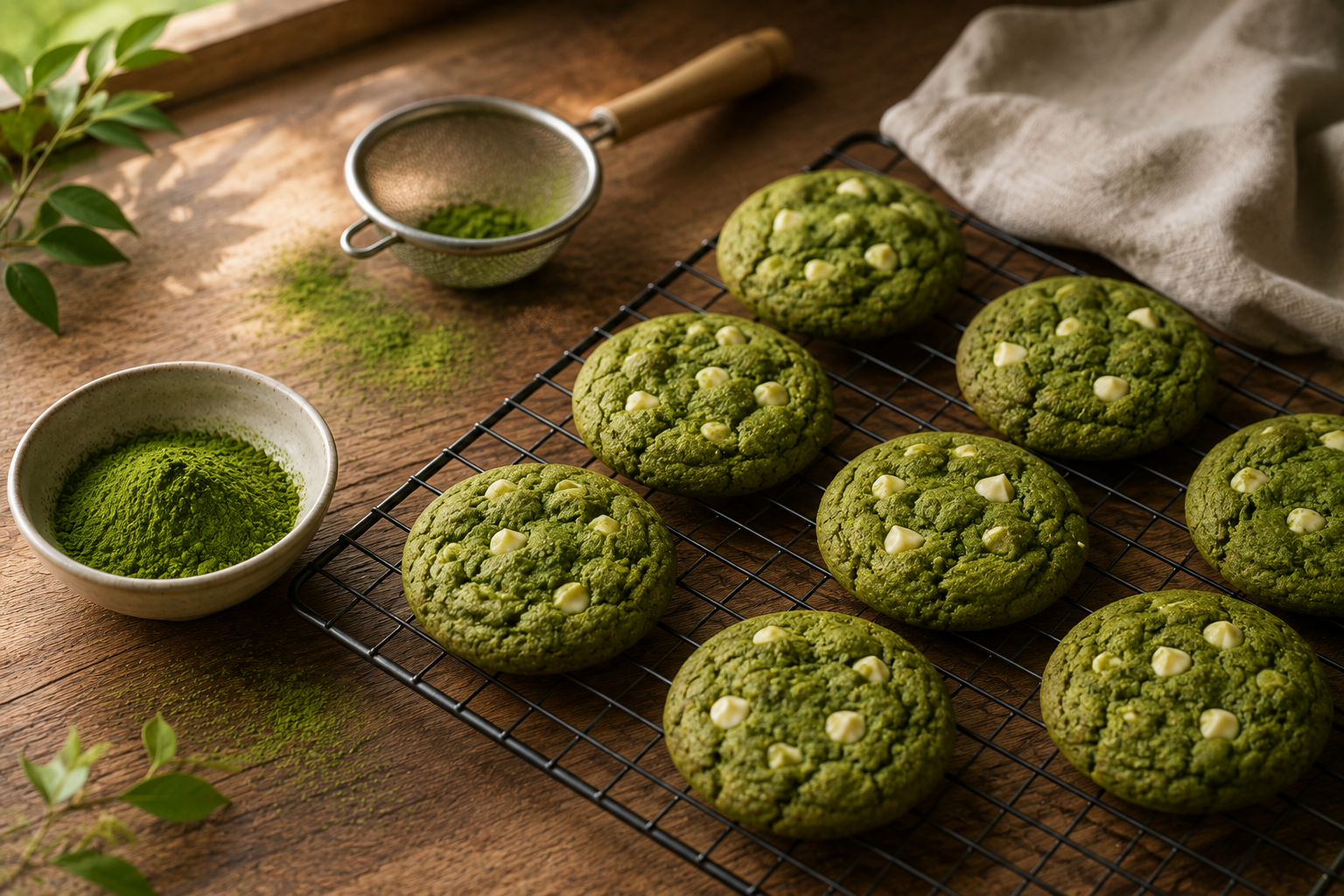
My first attempt at matcha cookies came out of the oven looking like regular sugar cookies with a faint grey-green tint, tasting almost nothing like matcha at all. My second attempt, overcorrecting hard, used nearly triple the matcha and came out bitter enough that even the white chocolate chips couldn’t save them. It took a few more batches to land somewhere in the middle, and once I did, the fix turned out to be almost entirely about which matcha I was using and how much, not some elaborate technique.
Baking with matcha is genuinely more forgiving than people expect once you know the two or three things that actually matter. Get those right, and the rest of any matcha recipe — cookies, cake, brownies, whatever you’re making — behaves pretty much like a normal recipe with a green tint and an earthy edge. None of it requires special equipment or professional technique, just a slightly different mindset than baking with something like cocoa powder, which most people already have intuition for.
The Problem You’re Actually Trying to Solve
You’ve searched for how to bake with matcha because either your first attempt came out flavorless and dull-colored, or it came out bitter and overwhelming, and you’re trying to figure out which mistake you made. Both problems trace back to the same two variables almost every time: using the wrong grade of matcha for baking, and getting the amount wrong relative to how much flour is in the recipe.
Unlike drinking matcha, where subtlety and umami are the whole point, baked matcha needs to survive oven heat, competing flavors like butter and sugar, and often chocolate, which means the delicate qualities of an expensive ceremonial tin are mostly wasted, while a stronger, more affordable grade actually performs better.
Who This Article Is NOT For
Let’s save you some scrolling if this isn’t quite your situation.
- If you’re making a straight matcha latte or drinking matcha traditionally, you want the opposite grade advice given here — my matcha powder brands comparison and how to make a matcha latte guides cover that side properly.
- If you already bake with matcha regularly and have your ratios dialed in, this is a foundational guide, not new information for an experienced matcha baker.
- If you’re looking for a specific recipe with exact grams for one particular dessert, this covers the general principles that apply across cookies, cakes, and other baked goods, with example ratios rather than one single locked recipe.
If you’re past that, here’s where the actual guide starts.
What Actually Matters When Baking With Matcha
Three things determine whether your matcha baked goods taste balanced or end up bitter and flat, and they’re the same three things nearly every experienced matcha baker agrees on.
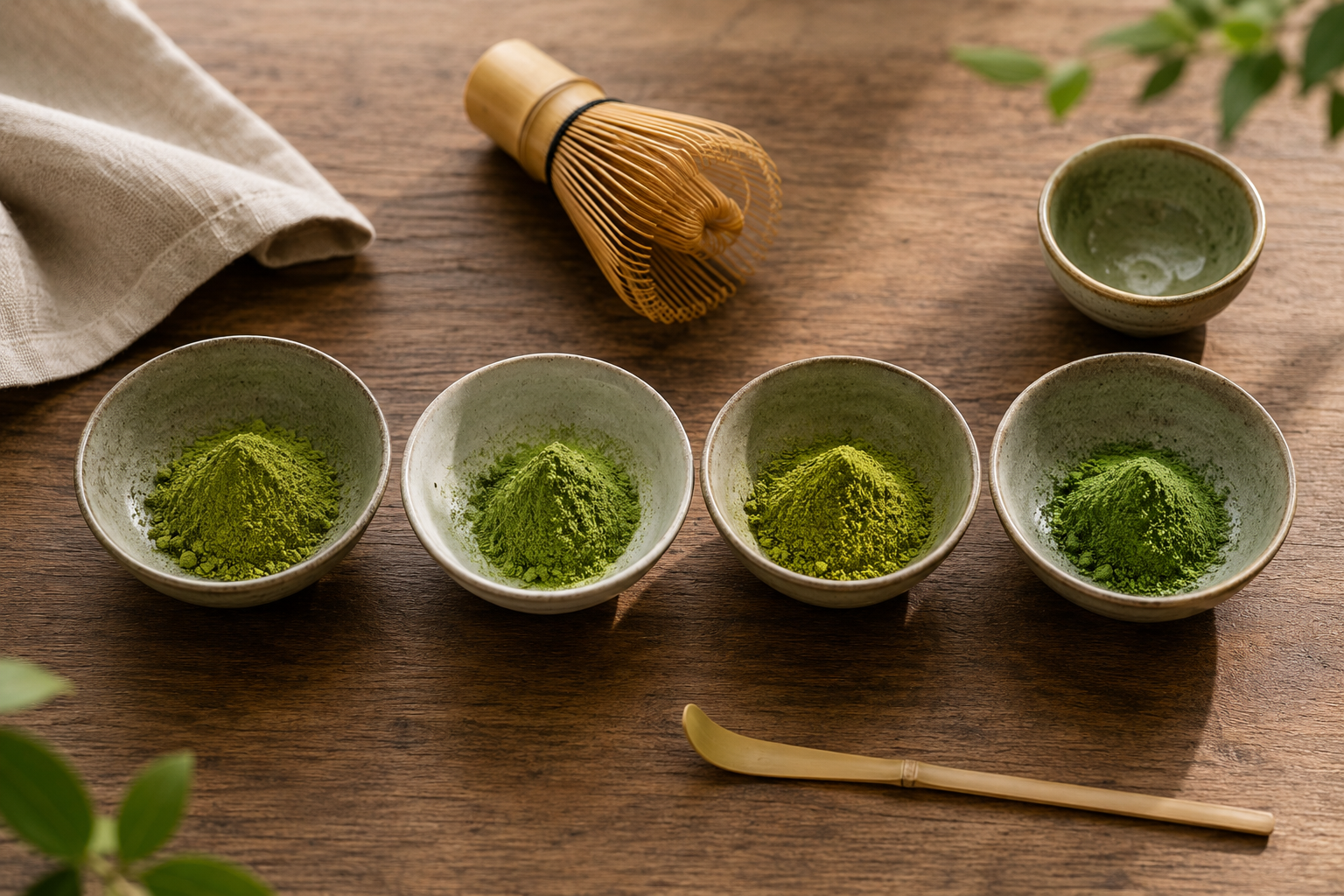
1. Grade. Culinary-grade matcha, not ceremonial grade, is the right choice for baking. It’s more affordable, has a bolder flavor that survives competing ingredients, and there’s no reason to spend ceremonial-grade money on subtlety that will get buried under butter and sugar anyway. Ceremonial grade is built to be appreciated on its own with just water; baking asks it to compete against several other strong flavors at once, which is a fight its subtlety is destined to lose.
2. Ratio. Too little matcha and you get a barely-tinted, flavorless result. Too much and it turns bitter and chalky. The general working range is about 1 to 2 teaspoons of matcha per cup of flour, adjusted to taste from there. This is one of the more common places recipes disagree with each other, mostly because personal taste for how strongly “matcha-forward” a bake should taste varies quite a bit from person to person.
3. Sifting and mixing method. Matcha clumps easily, and unsifted pockets of powder bake into bitter, unpleasant streaks rather than blending smoothly into the batter or dough.
The Ratio Guide
| Matcha Amount (per 1 cup flour) | Result |
|---|---|
| Under 1 teaspoon | Barely tinted, minimal flavor — not enough to register as “matcha” |
| 1–2 teaspoons | The reliable working range — visible green color, clear matcha flavor, no bitterness |
| Over 1 tablespoon | Bitter, chalky, and can taste unpleasant even with sugar and chocolate added |
Start at the lower end of the 1–2 teaspoon range for your first attempt at any new recipe, taste the raw dough or batter if it’s safe to do so, and adjust upward slightly next time if you want a stronger flavor.
The Method, Step by Step
Choosing Your Matcha
Reach for a culinary-grade matcha rather than ceremonial grade. Culinary grade is processed for boldness and affordability rather than the delicate umami ceremonial grade is prized for, which makes it the better tool for a job where it has to compete with butter, sugar, eggs, and often chocolate. Save your ceremonial-grade tin for drinking straight, where its subtlety can actually be appreciated.
Sifting Before Mixing
Always sift matcha together with your dry ingredients (flour, baking powder, baking soda, salt) before combining with anything wet. This breaks up the natural clumps matcha forms in the tin and prevents small pockets of concentrated powder from baking into bitter streaks in the finished product.
Mixing It In
Add the sifted matcha-and-flour mixture to your wet ingredients gradually, mixing just until combined. Overmixing develops gluten in a way that can make baked goods tougher, and it doesn’t improve matcha distribution any further than a gentle fold already does.
Adjusting Other Ingredients
Matcha’s slightly bitter, earthy edge sometimes calls for small adjustments elsewhere in a recipe. A touch more sugar than the base recipe calls for can help balance a bolder matcha dose, and pairing matcha with white chocolate, rather than dark or milk chocolate, tends to complement its flavor without competing against it. Vanilla, in small amounts, also softens matcha’s more vegetal notes without masking the flavor entirely.
Baking Temperature and Color
Matcha’s vivid green color is genuinely heat-sensitive, similar to how it reacts to overly hot brewing water. Baking at a moderate temperature (most matcha cookie and cake recipes fall in the 325–350°F / 165–180°C range) rather than pushing higher heat for a faster bake helps the color stay vibrant instead of drifting toward a duller olive or brown as it cooks.
Common Mistakes and How to Fix Them
Barely any matcha flavor or color. Almost always means the matcha amount is too low, or ceremonial-grade matcha was used at a dose meant for the bolder culinary grade. Increase the amount incrementally, and confirm you’re using culinary grade.
Bitter, chalky finished product. Too much matcha for the amount of flour, full stop. Scale back toward the 1–2 teaspoon per cup range and reassess from there.
Green color turned brown or dull after baking. Usually an oven temperature issue — matcha’s chlorophyll degrades under high heat the same way it does under boiling water. Lower the temperature slightly and check for doneness a few minutes earlier than the recipe suggests.
Visible green streaks or clumps in the finished bake. A sifting problem. Matcha needs to be sifted thoroughly with the dry ingredients before it ever meets a wet ingredient, not just stirred in at the end.
Where to Get What You Need
Shop culinary-grade matcha for baking on Amazon →
Shop matcha sifters on Amazon →
A Few Recipes Worth Trying
Matcha cookies with white chocolate. The most forgiving starting point for a first attempt — a standard butter cookie base with 1 to 2 tablespoons of sifted culinary-grade matcha per roughly 2 cups of flour, and white chocolate chips folded in at the end. Chilling the dough for at least 30 minutes to an hour before baking helps the cookies hold their shape and spread evenly, and it also gives the matcha a chance to hydrate slightly into the dough rather than baking as dry pockets of powder.
Matcha pound cake or loaf cake. A dense, buttery cake base takes matcha well, since the richness balances its earthiness naturally. Sift the matcha with the flour as usual, and consider a light glaze (a simple powdered sugar and milk mixture) on top rather than heavy frosting, which can overwhelm the tea flavor. This is also a good format for testing your preferred matcha strength, since a loaf’s simpler flavor profile makes the matcha itself easier to taste and judge than in a cookie loaded with chocolate.
Matcha brownies. Swap a portion of the cocoa powder in a standard brownie recipe for matcha, or use matcha alongside white chocolate rather than dark chocolate or cocoa, since matcha and cocoa together can turn muddy rather than complementary. A white chocolate matcha brownie keeps the color vibrant and the flavor distinct in a way that mixing matcha directly with dark chocolate tends not to.
A Few Things People Ask Me
Can I use the matcha I already have for drinking in a baking recipe instead of buying culinary grade separately? You can, but expect a milder flavor and a higher cost per use than if you’d bought culinary grade specifically for baking. If you bake with matcha regularly, keeping a separate, more affordable culinary-grade tin just for that purpose makes more sense than using up an expensive drinking-grade tin.
Why do some recipes call for a lot more matcha than others? Personal taste and the specific bake matter a lot here. A subtle matcha pound cake might use less than a bold matcha cookie meant to taste distinctly of tea. Treat any recipe’s matcha amount as a starting point within the general 1–2 teaspoon per cup range, not a fixed rule.
Does matcha lose its health benefits when baked? Some of the more heat-sensitive compounds do degrade under oven temperatures, similar to what happens with boiling water in a drink. If you’re baking with matcha specifically for flavor and color rather than as a health strategy, this isn’t something to worry much about — treat baked matcha as a flavor ingredient, not a wellness supplement.
Can I substitute matcha for cocoa powder or other powders 1-to-1 in an existing recipe? Not reliably. Matcha is more potent by volume than cocoa powder in terms of both color and flavor intensity, and it doesn’t behave identically in the batter. It’s safer to start from a recipe specifically designed around matcha, or add matcha to a portion of the dry ingredients at the 1–2 teaspoon per cup guideline rather than doing a straight swap.
Why do my matcha baked goods taste better the day after baking than fresh out of the oven? This is a real phenomenon a lot of matcha bakers notice — matcha’s flavor can take a little time to settle and mellow into the rest of the batter after baking, similar to how some spiced baked goods taste better a day later once flavors have had time to meld. If your first bite out of the oven tastes slightly harsh or one-dimensional, give it until the next day before judging the recipe.
Does the brand of matcha make a big difference in baking specifically? Less than it does for drinking straight, but it’s not negligible. A cheap, low-quality culinary matcha can taste dull or overly bitter even at the right dose, while a well-sourced culinary-grade tin holds flavor and color better through the bake. It’s worth using a reasonably good culinary-grade brand rather than the absolute cheapest option available.
Where I Landed
The whole lesson from my early bitter-cookie disaster came down to two fixes: use culinary grade, not ceremonial, and respect the 1–2 teaspoon per cup range instead of guessing generously. Everything else — sifting, mixing gently, watching the oven temperature for color — is standard good baking practice that just happens to matter a little more with matcha than with most other ingredients, since its color and flavor are both more heat-sensitive than a lot of home bakers expect going in.
Once you’ve got the ratio dialed in for your own taste, matcha behaves like any other flavoring you’d fold into a batter, and it’s genuinely one of the more forgiving ingredients to experiment with once the basics click. Don’t be afraid to push your ratio slightly outside the standard range once you know your own preference — the guideline is a safe starting point, not a rule carved in stone.
If you want to see how the same core principles apply to drinking matcha rather than baking with it, my matcha powder brands comparison is the natural next stop.