Disclosure: This post contains affiliate links. If you buy through one of them, I may earn a small commission at no extra cost to you.
My first attempt at matcha ice cream came out tasting almost entirely like sweetened cream with a faint green tint, and I spent a while assuming matcha just didn’t translate well into frozen desserts. It turned out the problem was the same one that trips people up in baking: not enough matcha, and the wrong grade for the job. Once I fixed both, the difference wasn’t subtle — the tea flavor finally showed up instead of hiding behind the cream and sugar, and I realized the issue had never been the ingredient itself.
Matcha desserts range from genuinely easy weeknight projects to more involved multi-step recipes, and the trick to enjoying this whole category is picking the right one for your patience level rather than jumping straight to the most photogenic option you saw online. Some of the most Instagrammable results also happen to be the most forgiving to make, which is a nice coincidence worth knowing about upfront.
The Problem You’re Actually Trying to Solve
You’ve searched for a matcha dessert guide because you want to make something beyond a latte or a batch of cookies, and the sheer number of options, ice cream, mochi, cheesecake, tiramisu, parfaits, makes it hard to know where to start or which ones are actually approachable versus which ones look simple in a video but are genuinely fussy in practice.
Who This Article Is NOT For
Let’s save you some scrolling if this isn’t quite your situation.
- If you want baking-specific technique and ratios, my how to bake with matcha guide covers cookies, cakes, and brownies in more depth than this broader overview does.
- If you want a single locked recipe with exact measurements for one dessert, this covers the landscape of options and what to expect from each, with example ratios rather than one definitive recipe per dessert.
- If you’re looking for traditional wagashi specifically, my wagashi beginner guide covers that separate, more traditional category of Japanese sweets.
If you’re past that, here’s where the actual guide starts.
What Actually Matters Across Every Matcha Dessert
Three things determine whether a matcha dessert tastes like a real tea-flavored treat or just sweetened cream with a green tint, and they hold true across nearly every recipe in this category.
1. Grade. Culinary-grade matcha, not ceremonial grade, is the right call for nearly everything here. It’s bolder and more affordable, and it survives competing against cream, sugar, and chocolate better than a delicate ceremonial tin does.
2. Amount. Desserts with a lot of dairy or sugar (ice cream, cheesecake) need more matcha per batch than you’d expect to actually register as matcha-flavored, not just green-tinted.
3. When the matcha goes in. Some desserts (no-bake cheesecake, mochi filling) let you taste and adjust as you go, which is far more forgiving than a baked dessert where you’re committed once it’s in the oven.
The Desserts, One by One
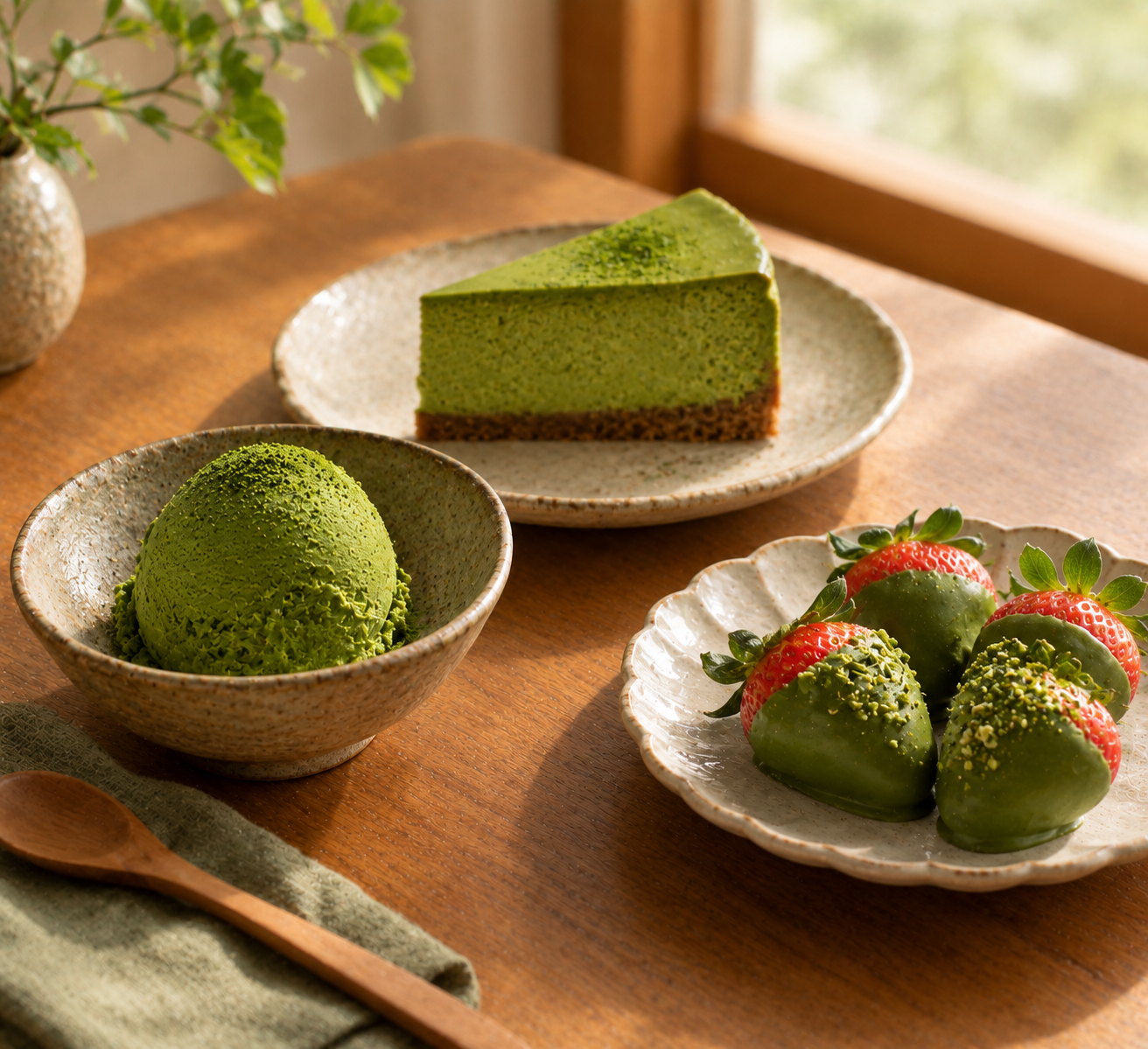
Matcha Ice Cream
The most straightforward entry point, and a genuinely good place to start if you’ve never cooked with matcha before. A basic custard or no-churn base takes matcha well, since the fat content in cream and milk mellows its more vegetal edge naturally.
The key adjustment: Standard recipes tend to under-matcha for how much dairy is involved. Where a cookie recipe might use 1 to 2 teaspoons per cup of flour, ice cream generally wants closer to 2 to 3 tablespoons of matcha per quart of base to actually taste distinctly like matcha once frozen, since cold temperatures mute flavor perception more than you’d expect. Taste the unfrozen base and expect it to seem slightly stronger than you want before churning — the cold will tone it down more than you’d guess.
Why it works well as a starting point: You can taste and adjust the unfrozen base before committing it to the freezer, which removes most of the guesswork a baked dessert doesn’t allow for.
Matcha Mochi (Ice Cream Mochi)
This one has more steps than ice cream alone, since you’re making both a filling and a separate glutinous rice dough, but none of the individual steps are difficult on their own, just numerous enough to plan for a bit more prep time than a single-bowl recipe would need.
The method, broadly: A cream cheese and matcha filling gets frozen into small discs first, then wrapped in a glutinous rice flour dough that’s been cooked into a smooth, stretchy consistency. The dough itself typically uses very little or no matcha, since the filling is where the flavor concentration lives, and the dough’s job is mostly textural rather than flavor-forward.
Why it’s worth the extra steps: The contrast between the chewy mochi exterior and the cold, creamy filling is genuinely part of the appeal, and it travels and stores better in the freezer than a scoop of loose ice cream does, making it a good make-ahead option for guests.
No-Bake Matcha Cheesecake
A genuinely forgiving dessert for a matcha beginner, since there’s no baking step to worry about scorching the color or flavor, and you can taste the filling before it sets.
The method, broadly: A cream cheese, sugar, and whipped cream filling with sifted matcha folded in, poured over a cookie crumb crust and chilled until set, typically for several hours or overnight.
Why it’s a good pick: Because you can taste the filling before refrigerating it, this is one of the easiest matcha desserts to dial in to your own preferred strength on the first attempt, without any risk of overbaking ruining the color the way a baked cheesecake can.
Matcha Tiramisu
A less traditional but increasingly popular variation on the Italian classic, swapping the espresso-soaked ladyfingers for a matcha-soaked version, layered with mascarpone.
The method, broadly: Whisked matcha (prepared similarly to how you’d make a latte base) replaces the espresso for soaking the ladyfingers, layered with a sweetened mascarpone and whipped cream mixture, dusted with more matcha on top instead of cocoa powder.
Why it works: Matcha’s slight bitterness plays a similar structural role to espresso’s bitterness in the original recipe, cutting through the richness of the mascarpone in a genuinely comparable way, which is part of why this variation has caught on rather than feeling like a forced substitution.
Matcha-Covered Strawberries and Simple Toppings
The lowest-effort option on this list, and worth knowing about specifically because not every matcha dessert needs to be a project.
The method: Melted white chocolate mixed with sifted matcha, used to dip strawberries or drizzle over other simple desserts like ice cream or plain cake.
Why it’s worth having in your back pocket: When you want something matcha-flavored without committing real time to it, this delivers a genuine result in minutes rather than hours.
What You’ll Need
Shop culinary-grade matcha for desserts on Amazon →
A Few Things People Ask Me
Why does my matcha dessert taste flat even though I followed a recipe closely? Two likely culprits: using ceremonial-grade matcha where culinary grade was actually the right call, or a recipe that simply under-measures matcha relative to how much dairy or sugar is in the batch. Don’t be afraid to increase the matcha amount slightly beyond what a recipe states if the first attempt tastes underwhelming.
Can I use the same matcha for drinking and for desserts? You can, but you’ll get more value using a dedicated culinary-grade tin for desserts and saving a ceremonial-grade tin for drinking straight. Culinary grade is both more affordable and better suited to holding up against competing flavors, so there’s little reason to use your nicer tin for baking or frozen desserts.
Do matcha desserts need to be less sweet than regular versions to let the tea flavor come through? Not necessarily less sweet, but matcha does pair particularly well with slightly reduced or more restrained sweetness compared to, say, a very sugary vanilla dessert, since excess sugar can bury matcha’s more subtle savory-bitter character. Many matcha dessert recipes lean slightly less sweet than their non-matcha counterparts for exactly this reason.
Which dessert on this list is the best starting point if I’ve never cooked with matcha before? No-bake matcha cheesecake or matcha ice cream, both for the same reason — you can taste and adjust the base before it’s locked in by baking or freezing, which removes most of the risk of a disappointing first attempt.
Can I make any of these ahead of time for a gathering? Matcha mochi and no-bake cheesecake are both genuinely better make-ahead options than ice cream churned fresh that day, since mochi holds up well in the freezer for days and cheesecake actually benefits from a longer chill time to fully set and develop flavor. Ice cream is best within a week or two of churning before texture starts to suffer from ice crystal formation.
Is white chocolate really the best pairing for matcha, or does dark chocolate work too? White chocolate is generally the more popular pairing because its sweetness and creaminess complement matcha’s bitterness without competing against it the way dark chocolate’s own bitterness can. Some people do enjoy the combination of matcha and dark chocolate, but it’s a bolder, more polarizing pairing than the more universally liked white chocolate version.
Where I Landed
The lesson from my flat-tasting first ice cream batch really does apply across this whole category: use culinary grade, and use more of it than most recipes initially suggest, especially in anything dairy-heavy. Once that’s dialed in, matcha desserts stop being a gamble and start being one of the more reliable ways to introduce matcha to someone who’s on the fence about the flavor in its straight, undiluted form — the sweetness and familiar dessert format does a lot of the persuading that a plain bowl of whisked matcha never quite manages on its own.
Start with whichever of these feels most approachable given your own patience for kitchen projects, not necessarily the one that looks most impressive online. A simple no-bake cheesecake done well beats an ambitious mochi attempt that falls apart from rushed prep, every time.
If you want the deeper technical dive into ratios and troubleshooting specifically for baked goods, my how to bake with matcha guide picks up where this one leaves off, and my matcha powder brands comparison is worth a look if you don’t yet have a good culinary-grade tin on hand.