Disclosure: This post contains affiliate links. If you buy through one of them, I may earn a small commission at no extra cost to you. Specs below are from manufacturer and retailer listings at the time of writing; models and colors change often.
Quick Picks
- Best overall for green tea: Hario Filter-in Bottle (750ml) – heatproof glass, a fine built-in filter, and made in Japan. Hario Filter-in Bottle on Amazon
- Best for a family-size fridge pitcher: a large cold-brew tea pitcher with an infuser and airtight lid – ideal for mugicha by the liter. Cold brew tea pitchers on Amazon
- Best for taking to work: a small portable filter-in bottle. Portable cold brew tea bottles on Amazon
- Best budget option: a glass jar plus a fine-mesh strainer – it works just as well, with a little more effort.
- Don’t forget the tea: cold brew is only as good as the leaf. Nio Teas’ sencha collection – at the time of writing, ordering through the links on this page automatically applies a 10% discount at checkout, no code needed. Offers can change, so check the final price in your cart.
Below: what actually matters in a cold-brew bottle, the main types compared, and how to cold-brew green tea and barley tea properly.
Cold-brewed Japanese green tea is one of the simplest pleasures in tea. You put leaves in cold water, wait a few hours, and get a cup that’s smoother, sweeter and less bitter than hot-brewed tea – with almost no effort. In Japan, this method is called mizudashi, and in summer, many households keep a bottle of cold-brewed green tea or barley tea in the fridge at all times.
You can do it in any jar. But the right bottle makes it so easy that you’ll actually do it every day. Here’s what to look for.
The Problem You’re Actually Trying to Solve
You want to make cold-brew tea at home – to replace bottled tea, save money, or enjoy better-tasting green tea – and you’re looking at a confusing range of bottles, pitchers and infusers. You want to know which design works best for Japanese tea, and what features actually matter.
Who This Article Is NOT For
- If you’re looking for good loose-leaf tea to cold-brew, my sencha brand comparison covers where to buy it.
- If you mostly make barley tea and want to know how, my mugicha guide covers the method.
- If you want cold brew coffee, many of these bottles work, but coffee needs a coarser grind and a different filter.
What Actually Matters in a Cold Brew Tea Bottle
1. A fine filter
Japanese green tea, especially deep-steamed fukamushi sencha, has small leaf particles. A coarse filter lets them through, leaving your tea gritty and cloudy. Look for a fine mesh – some guides suggest roughly 200-400 microns – or a tightly woven filter.
2. Material
- Glass doesn’t hold onto flavors or smells, so it’s ideal if you switch between green tea, hojicha and barley tea. Heatproof (borosilicate) glass is more durable.
- Plastic (look for BPA-free) is lighter and less breakable but can absorb tea flavors and odors over time.
- Stainless steel is durable, but you can’t see the tea brewing.
3. Size
- 300-750ml suits one person or a day at work.
- 1-2 liters suits families and batch-brewing mugicha.
4. A wide mouth
A wide opening makes it easy to add leaves, ice and fruit – and much easier to clean.
5. A good seal
A tight lid stops the tea from absorbing fridge smells and lets you lay the bottle down or carry it in a bag.
6. Replacement parts
Filters and silicone seals wear out. A brand that sells spare parts means your bottle lasts years.
The Main Types, Compared
| Type | Example | Size | Best for | Watch out for |
|---|---|---|---|---|
| Filter-in bottle | Hario Filter-in Bottle | 750ml | Green tea, one or two people | Glass can break |
| Portable filter bottle | Hario portable bottle | ~400ml | Work, commuting | Small batches only |
| Pitcher with infuser | Various brands | 1-2L | Families, mugicha | Takes fridge space |
| Large mizudashi pot | Hario Mizudashi-style pots | ~1L | Batch brewing | Larger filter, harder to carry |
| Jar + strainer | Any glass jar | Any | Budget | Strain separately |
Hario Filter-in Bottle
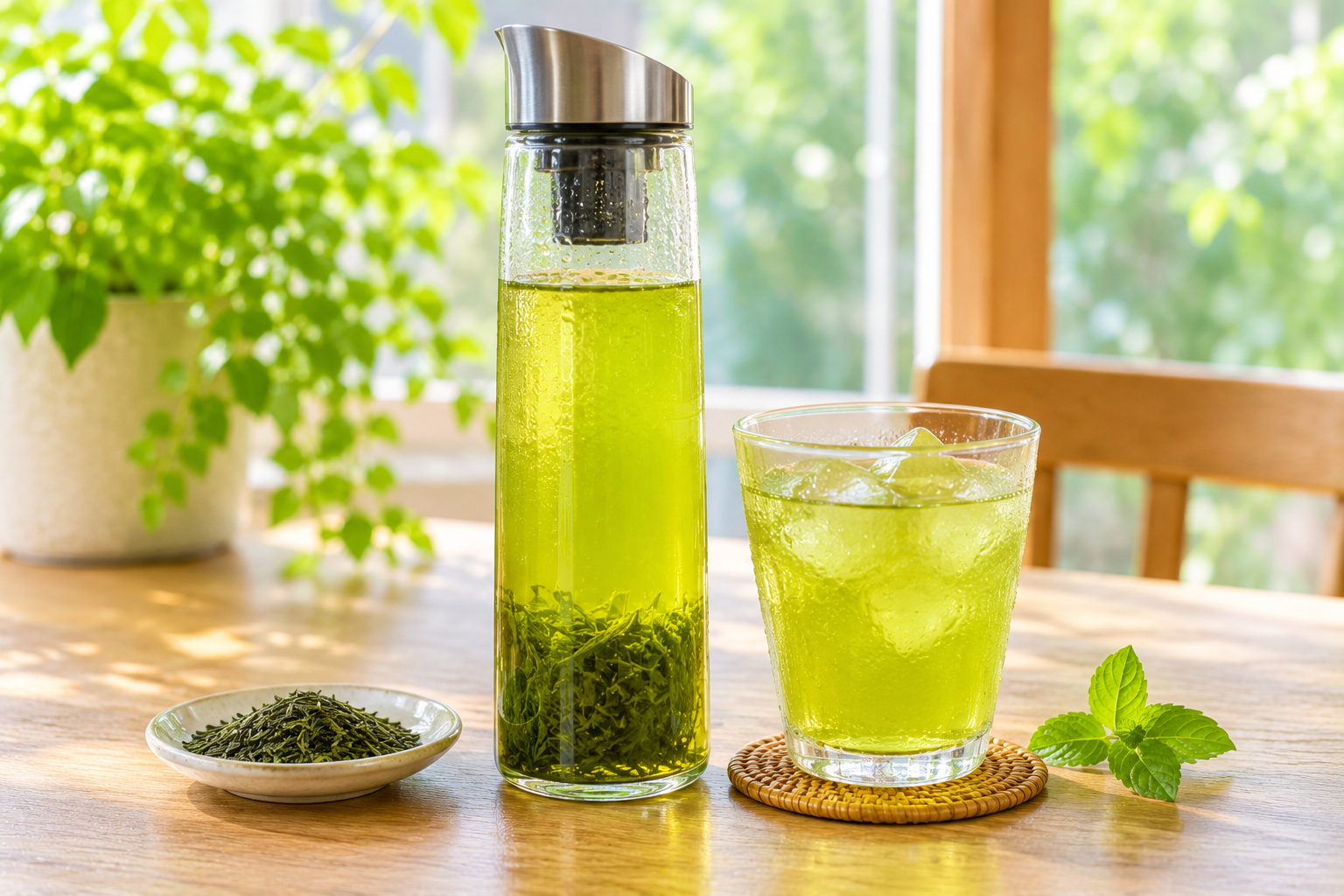
Hario is a Japanese glassware maker, and its Filter-in Bottle is designed specifically for cold-brew tea. The 750ml model uses a heatproof glass bottle, a silicone spout and stopper, and a polypropylene filter, and it’s made in Japan. You put tea leaves in the bottle, fill it with water, and pour through the filter built into the spout – no separate infuser to lift out.
Why it’s good for Japanese tea: the fine filter handles small sencha particles well, the glass doesn’t hold flavors, and the wine-bottle shape fits in a fridge door.
Downsides: glass can break if dropped, and some users find that the silicone parts pick up odors over time – replace them if they do.
Portable Filter Bottles
Smaller versions of the filter-in design are ideal for brewing a single serving overnight and taking it to work in the morning.
Pitchers With an Infuser
A pitcher with a removable infuser core is the easiest way to make tea for a whole family. Fill the infuser with tea leaves or a mugicha bag, add water, and refrigerate. Look for an airtight lid, a fine infuser mesh, and a shape that fits your fridge door.
Mizudashi Pots
Large Japanese-style cold-brew pots, such as Hario’s Mizudashi range, are designed for batch brewing. They’re great for barley tea and hojicha, though their larger filters may let more fine sencha particles through.
The Budget Option: Jar + Strainer
Any clean glass jar works. Brew the leaves loose, then pour through a fine-mesh strainer. The tea tastes just as good – you just have an extra step.
How to Cold-Brew Japanese Tea
| Tea | Amount per liter | Time in the fridge |
|---|---|---|
| Sencha | About 10-15g | 2-3 hours |
| Fukamushi sencha | About 10g | 1-2 hours |
| Gyokuro | About 15g | 3 hours |
| Hojicha | About 12-18g | 3-5 hours |
| Mugicha | 1 bag (check pack size) | 1-3 hours |
- Add tea leaves to the bottle or infuser.
- Fill with cold water – filtered water tastes best.
- Refrigerate for the time above. Taste and adjust next time.
- Remove the leaves or pour through the filter, so the tea doesn’t over-steep.
- Drink within a day or two. Cold-brew tea has no preservatives.
Matcha tip: don’t cold-brew matcha leaves – whisk or shake 1-2g of matcha into cold water instead, or stir a little into your cold-brewed sencha for a richer, greener cup.
Flavor Ideas for Your Cold-Brew Bottle
Once you have a bottle, it’s easy to experiment:
- Sencha with yuzu or lemon peel – add a strip of peel with the leaves for a bright, citrusy twist.
- Hojicha with a slice of ginger – warming flavor, even when cold.
- Genmaicha cold brew – toasty and nutty, and very forgiving.
- Sencha with fresh mint – a few leaves make an excellent summer drink.
- Half mugicha, half sencha – a gentle blend with a little caffeine.
Add fruit or herbs only for same-day drinking, since they can spoil faster than plain tea.
Cleaning and Care
- Rinse with hot water and a soft brush after each use.
- Avoid strong-smelling detergents, which can linger in silicone parts.
- For tea stains or mineral buildup, soak in diluted vinegar, then rinse well.
- Let all parts dry completely before reassembling.
- Replace filters and seals when they wear out or start to smell.
A Few Things People Ask Me
Why does cold-brew green tea taste sweeter? Cold water extracts less of the bitter compounds and caffeine, while the sweet, savory amino acids still come through.
Can I use tea bags? Yes. One or two green tea bags per 500ml works well, and mugicha bags are designed for it.
Can I put hot water in a glass cold-brew bottle? Only if the manufacturer says it’s suitable. Heatproof glass helps, but check the instructions before using hot water.
How long does cold-brew tea keep? About a day or two in the fridge.
Where I Landed
If you drink Japanese green tea, a filter-in bottle like Hario’s is the easiest upgrade you can make: put leaves in at night, pour smooth, sweet tea in the morning. For a family or for barley tea by the liter, a pitcher with an infuser is more practical. And if you just want to try cold brew first, a glass jar and a strainer cost almost nothing. Whichever you choose, start with good leaf – it makes more difference than any bottle.