Disclosure: This post contains affiliate links. If you buy through one of them, I may earn a small commission at no extra cost to you. Links to Hibiki-an itself are not affiliate links. Shipping rules, fees and customs information below are from Hibiki-an’s website at the time of writing (November 2026); they change often, so always check before ordering.
Quick Verdict
- Is Hibiki-an worth it? Yes, especially for gyokuro and matcha. It’s a farm-based tea business in Ujitawara, in Kyoto’s Uji region, selling its own teas directly to customers worldwide – no wholesalers or retailers in between.
- Best for: gyokuro lovers, matcha drinkers who want Uji tea direct from the source, and anyone willing to order a few teas at once to make shipping worthwhile.
- Watch out for: limited returns, international shipping times, and customs fees on teaware in some countries.
- Best first order: a gyokuro and a matcha, aiming for the free-shipping threshold.
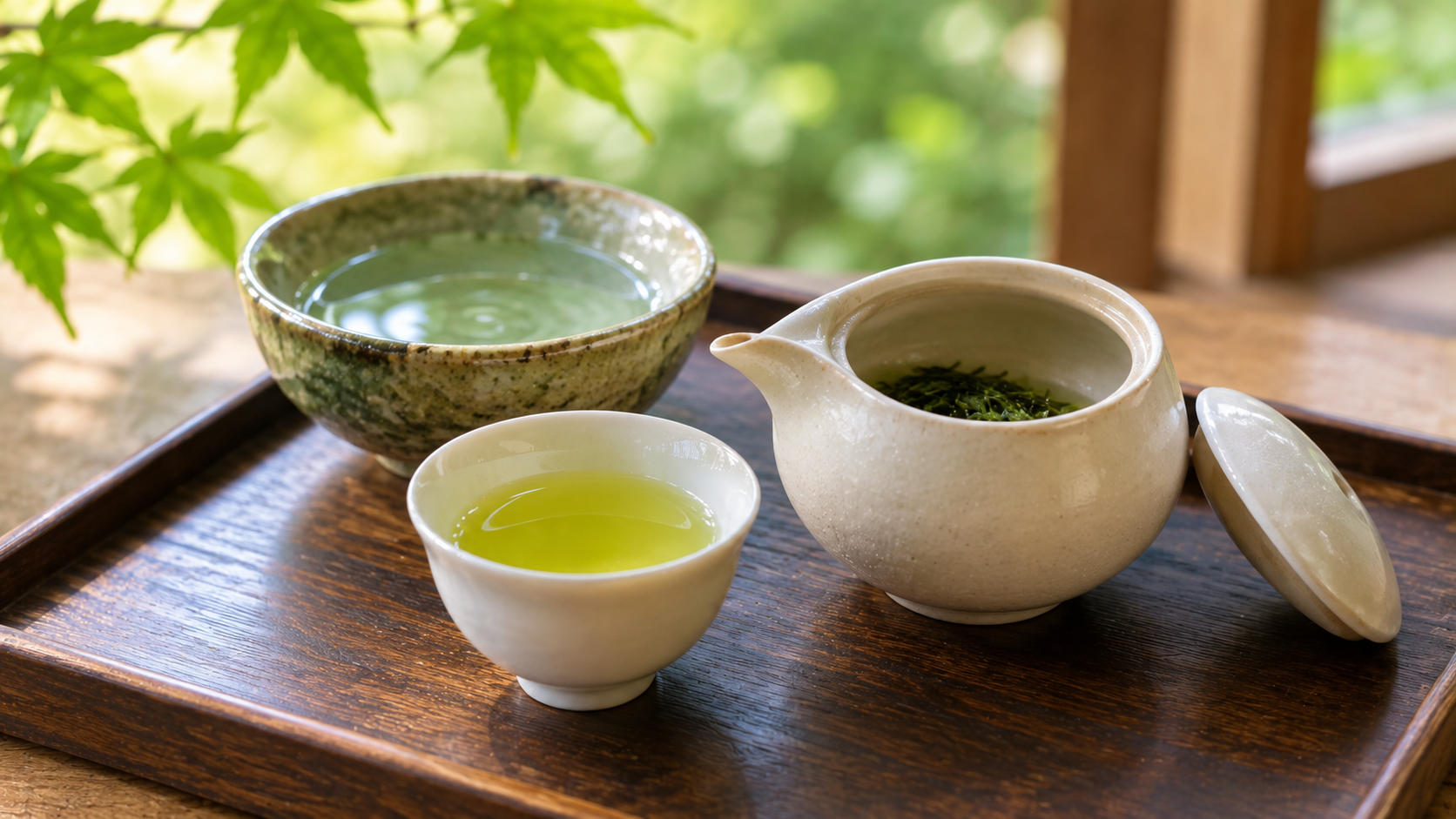
- Need the right pot for gyokuro? A small handle-less houhin teapot on Amazon makes brewing tiny, concentrated servings much easier.
- Prefer a curated shop with teas from many small farms? Nio Teas ships from Japan too. At the time of writing, ordering through the links on this page automatically applies a 10% discount at checkout – no code needed. Offers can change, so check the final price in your cart.
Below: who runs Hibiki-an, what it sells, how shipping and customs work, the honest downsides, and what to order first.
Most Japanese tea sold abroad passes through several hands before it reaches you: farmer, processor, wholesaler, exporter, importer, retailer. Hibiki-an skips almost all of them. It’s a tea business based on its own farm in Ujitawara, a small town in the hills of Uji, and it has been selling direct to international customers online for years.
That’s an appealing model – but buying from a farm on the other side of the world also comes with trade-offs. Here’s what to expect.
The Problem You’re Actually Trying to Solve
You want authentic Uji gyokuro or matcha, ideally from the people who grow it, and Hibiki-an keeps coming up. You want to know whether it’s trustworthy, how shipping and customs work, and which teas are worth ordering.
Who This Article Is NOT For
- If you’re comparing gyokuro from several brands, my gyokuro brand comparison puts the main options side by side.
- If you’re looking for everyday sencha from a range of sellers, my sencha brand comparison covers that.
- If you need tea within a few days, a seller in your own country will be faster.
Who Runs Hibiki-an
Hibiki-an is based in Ujitawara, Kyoto, in the Uji tea region. Ujitawara has a special place in tea history: it’s the home of Nagatani Sōen, who developed the steaming-and-rolling method behind modern sencha in the 18th century.
A few facts from Hibiki-an’s own site:
- Owner: Atsushi Yasui, who has been active in Ujitawara’s local tea associations
- Tea fields: Hibiki-an owns a tea farm in Uji and grows its tea mainly on cooperative farms in Uji, along with teas from other Kyoto and Japanese tea regions
- US office: a branch office in the United States
- Giving back: it donates part of its monthly sales to UNICEF and to Ashinaga, a Japanese foundation that supports young people who have lost parents
What You Can Buy
- Gyokuro – Hibiki-an’s signature, in several grades
- Matcha – from everyday to premium grades, including larger refill bags that are cheaper per gram than canisters
- Sencha, genmaicha and hojicha
- Certified organic teas, including a JAS-certified organic sencha
- Seasonal teas such as shincha (new-season tea), tencha and kuradashi (aged tea released in autumn)
- Tea bags, teaware, snacks and gifts
What’s Genuinely Good
- Direct from the source. Buying from a farm-based business removes wholesaler and retailer markups.
- Strong in shaded teas. Uji is famous for gyokuro and matcha, and that’s where Hibiki-an’s range shines.
- Seasonal specialties. Shincha in spring and kuradashi in autumn are hard to find outside Japan.
- Good-value refills. Larger matcha refill bags cost less per gram than small tins – ideal once you know you like a grade.
- Free shipping thresholds. At the time of writing, standard international shipping was free on orders from about $50, and express shipping free from about $150.
- Long-term customers. Many reviews come from people who say they’ve been buying for a decade or more.
The Honest Downsides
- Shipping times. At the time of writing, express shipping usually took about 4-8 days and standard shipping about 8-16 days – and the site warned of extra delays to some countries.
- Limited returns. Damaged, defective or wrongly shipped items are exchanged at Hibiki-an’s expense if reported within a week. Other exchanges are possible only for unopened tea or unused teaware, at your own shipping cost – and there are no cancellations after shipping.
- Customs on teaware. Tea itself may be duty-free in some countries, but teaware and snacks can attract duties and handling fees. For US customers, Hibiki-an’s site noted at the time of writing that green tea is duty-free but teaware and snacks faced a tariff plus a courier handling fee.
- Mixed independent reviews. On Trustpilot, Hibiki-an had a small number of reviews at the time of writing – mostly five stars for tea quality and service, but a few one-star reviews describing lost orders and slow replies. With so few reviews, it’s hard to draw firm conclusions, but it’s a reason to double-check your address and keep your order records.
- A dated website. It’s functional, but less polished than newer shops.
Shipping and Customs, in Plain English
| Option | Typical time (at the time of writing) | Tracking | Notes |
|---|---|---|---|
| Express International | About 4-8 days | Yes | Free on orders over about $150 |
| Standard International | About 8-16 days | No | Free on orders of about $50-150 |
| DHL Express | Varies | Yes | Available to selected countries, including the US |
Customs tips:
- Tea only is simplest. In the US, Hibiki-an said green tea itself was duty-free at the time of writing.
- Teaware may cost extra. Duties and courier fees can apply, so factor them in before adding a teapot to your order.
- EU customers: EU rules for low-value parcels have been changing in 2026, so check the latest charges.
What to Order First
| If you like… | Try | Why |
|---|---|---|
| Sweet, rich umami | A mid-grade gyokuro | Hibiki-an’s specialty and a good benchmark |
| Matcha straight | A premium matcha canister | Uji matcha direct from the source |
| Matcha every day | A matcha refill bag | Better value once you know your grade |
| Organic | Organic sencha | JAS-certified organic |
| Something seasonal | Shincha (spring) or kuradashi (autumn) | Hard to find outside Japan |
How to Brew Gyokuro (So You Don’t Waste It)
Gyokuro is easy to ruin with hot water. A simple method:
- Use plenty of leaf, little water: about 5g of leaf with 30-60ml of water.
- Cool the water to about 50-60°C (122-140°F).
- Steep for about 2 minutes without moving the pot.
- Pour every last drop into a small cup. Expect a tiny, intense, sweet serving.
- Re-steep two or three times with slightly hotter water and shorter times.
A small houhin or kyusu makes this much easier than a large teapot.
A Few Things People Ask Me
Is Hibiki-an legit? It’s an established Uji tea business with a long history of selling internationally and many long-term customers. As with any international order, keep your records and double-check your address.
How long does Hibiki-an take to arrive? At the time of writing, roughly 4-8 days by express or 8-16 days by standard shipping, with possible delays to some countries.
Will I pay customs? It depends on your country and what you order. Tea is often simpler than teaware.
Is Hibiki-an better than buying from a big brand? For gyokuro and Uji matcha direct from the source, it’s an excellent option. Big brands are easier for fast domestic delivery.
Where I Landed
Hibiki-an is one of the most direct ways to drink Uji tea outside Japan: farm-based, focused on gyokuro and matcha, and fairly priced once you reach free shipping. It isn’t the fastest or most flexible shop, and its return policy is strict, so plan your order and double-check your details. If you love shaded Japanese teas, it’s well worth a try.
You can browse its range at Hibiki-an.